

The "Al-Qaseh" Digital Wallet: An Analysis of Operational Performance and Expansion Challenges in the Iraqi Market
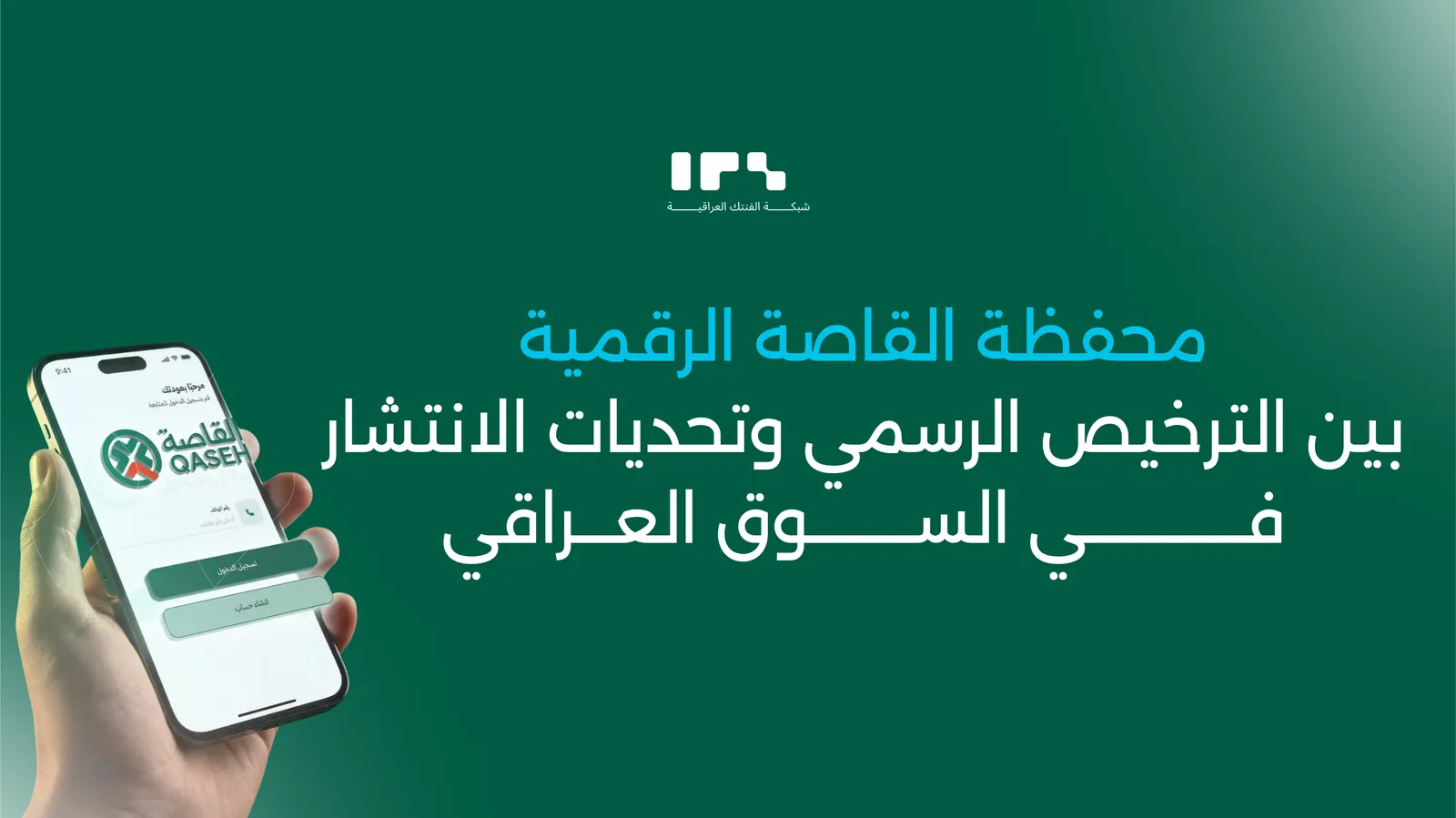
The electronic payment ecosystem in Iraq continues to attract new digital wallets and applications, all vying for a place within the financial inclusion framework championed by the Central Bank of Iraq. In this context, the "Al-Qaseh" wallet—operated by Al-Qaseh Financial Services and Electronic Payment—has emerged as an officially licensed digital wallet, offering financial solutions tailored to both individuals and businesses.
The electronic payment ecosystem in Iraq continues to attract new digital wallets and applications, all vying for a place within the financial inclusion framework championed by the Central Bank of Iraq. In this context, the "Al-Qaseh" wallet—operated by Al-Qaseh Financial Services and Electronic Payment—has emerged as an officially licensed digital wallet, offering financial solutions tailored for both individuals and businesses.
Despite its regulatory compliance and legal licensing, an assessment of its on-the-ground performance and user experience reveals several operational bottlenecks and challenges that hinder its growth and impact within the local market.
In an economic environment like Iraq’s—which remains heavily reliant on cash—a robust network of agents and cash-in/cash-out points serves as the lifeline for any digital wallet. In this regard, the Al-Qaseh wallet lags behind major financial entities; its service network and access points are concentrated within a limited geographical area—primarily Najaf and its neighboring provinces—failing to achieve a comprehensive reach across the rest of the country.
Furthermore, the wallet suffers from a limited presence within the point-of-sale (POS) infrastructure at major retail outlets and commercial establishments. It also lacks integration with most local e-commerce platforms, which restricts its practical value as a convenient, everyday payment tool for consumers. Regarding the software architecture and application stability across mobile app stores, usage data reveals several challenges affecting the user experience, most notably:
Slow digital verification processes: Many new users experience significant delays in the review and validation of their identification documents (such as those containing electronic chips or unified national ID cards). This hinders the upgrade of a wallet from a "temporary" status to a fully verified, permanent account, as required by Central Bank regulations.
Technical stability and updates: The application’s software framework occasionally experiences unexpected outages or slow response times—particularly during peak usage periods or following periodic updates for iOS and Android—which negatively impacts the seamless execution of time-sensitive financial transactions.
User feedback also points to slow response times from call centers and technical support channels when handling complex inquiries or resolving pending transfers—a critical factor in building trust within the financial services sector.
Furthermore, although the wallet operates under the unified national payment system, direct top-ups via external bank cards or transfers to other digital wallets occasionally encounter procedural hurdles related to inter-platform settlement mechanisms.
Nevertheless, the "Al-Qassa" (القاصة) wallet remains a secure option, fully protected from a legal and regulatory standpoint, as it operates under the umbrella of the Central Bank of Iraq and adheres to established financial compliance standards. However, its ability to compete and bridge the gap with leading entities in the sector remains contingent upon its capacity to address technical bottlenecks, expand its commercial acceptance, and develop a more flexible and responsive customer support infrastructure.