

Why Does the Electronic Payment Experience Differ Between Baghdad and Other Iraqi Provinces?
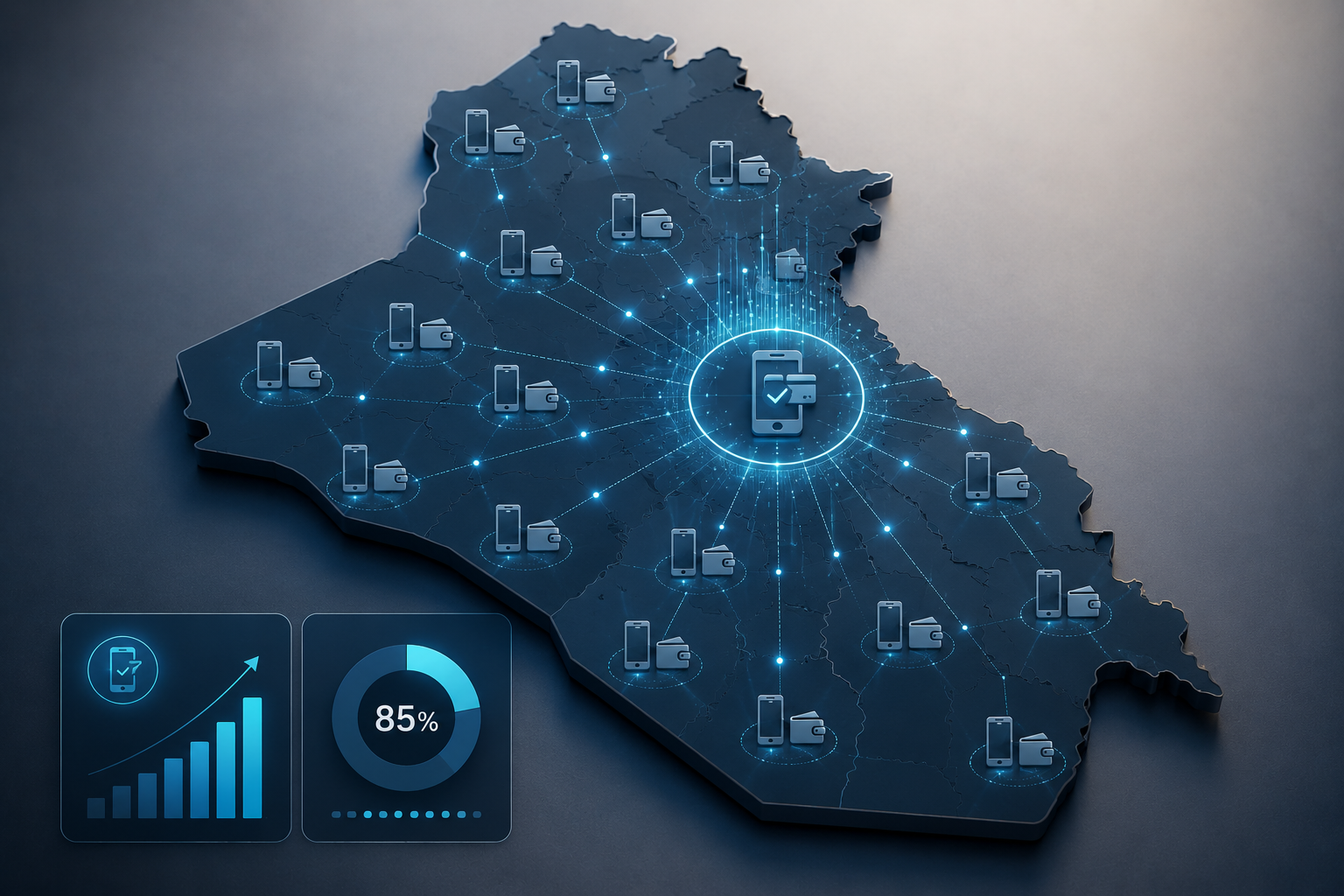
Despite the rapid expansion of electronic payment services across Iraq in recent years, the user experience still differs significantly between Baghdad and other provinces
While some areas of Baghdad have increasingly adopted:
- Digital wallets
- POS devices
- In-app payments
- Everyday digital services
many other provinces still rely heavily on cash and traditional transactions, with clear differences in the spread and accessibility of digital financial services.
This gap has raised an important question within Iraq’s fintech market:
Is Iraq really experiencing one unified digital transformation?
Baghdad Is Moving Faster Than Other Provinces
In Baghdad — especially within:
- Shopping malls
- Modern restaurants
- Cafés
- Large retail stores
- Delivery applications
electronic payment has become a natural part of daily transactions for a growing segment of users.
Many customers in the capital now directly ask:
Do you have electronic payment?
In some places, the absence of POS devices or digital wallet support is already considered a weakness for the business itself.
But the Picture Is Different Outside the Capital
In contrast, many provinces still rely more heavily on:
- Cash
- Traditional money transfers
- Direct payments
- Cash-based markets
In some areas, users may struggle with:
- Finding POS devices
- Using digital wallets
- Accessing stable internet
- Relying on financial applications daily
This creates a completely different electronic payment experience from one province to another.
Internet and Infrastructure Play the Biggest Role
One of the biggest challenges facing electronic payment expansion outside Baghdad is:
Infrastructure.
Digital payment systems rely directly on:
- Internet access
- Network stability
- Applications
- Digital systems
In regions suffering from weak connectivity or frequent internet interruptions, cash becomes for many people:
The easiest and safest option.
This is why many stores and services still hesitate to depend entirely on digital payment systems.
The Nature of the Market Is Different Too
The difference is not only technological — it is also related to the structure of the market itself.
In Baghdad, there are:
- More companies
- More applications
- Larger delivery networks
- Higher e-commerce activity
- Wider presence of malls and modern retail stores
Meanwhile, many provinces still rely more heavily on:
- Traditional markets
- Small local shops
- Direct face-to-face transactions
- Daily cash circulation
making the demand for electronic payments lower in some areas compared to the capital.
Trust Remains a Major Factor
Part of the issue is also related to trust.
In several provinces, many users still feel more comfortable dealing with cash because of concerns about:
- System failures
- Weak technical support
- Application problems
- Limited digital experience
- Fear of losing money or delayed transactions
For this reason, the spread of digital wallets does not necessarily mean people are using them in the same way everywhere.
Fintech Companies Are Facing Two Different Iraqs
What is happening in Iraq today reveals that fintech companies are not dealing with one completely unified market, but rather with:
A digital Iraq inside some cities,
and a cash-based Iraq in other areas.
This forces companies to adapt to:
- Infrastructure differences
- Variations in digital culture
- Uneven service quality
- Different internet speeds
- Local market behavior in each province
making expansion outside Baghdad far more complex than it may appear.
Could This Situation Change in the Future?
Despite the current gap, indicators show that digital services are gradually expanding across different provinces, especially with:
- The spread of smartphones
- Expansion of digital wallets
- Growing application usage
- Expansion of delivery services and e-commerce
At the same time, achieving a more unified electronic payment experience across all provinces will likely require:
- Better infrastructure
- Improved internet quality
- Greater trust in digital services
- Wider expansion of electronic payment points
Conclusion
The electronic payment experience in Iraq still differs significantly between Baghdad and other provinces due to factors related to infrastructure, market structure, user trust, and the spread of digital services.
As fintech continues expanding across Iraq, the real challenge will not only be distributing digital wallets or POS devices, but creating a consistent digital experience that users in all provinces can trust and use with the same level of convenience and confidence