

Why Do Many Iraqis Withdraw Their Salaries Immediately After Receiving Electronic Payments?
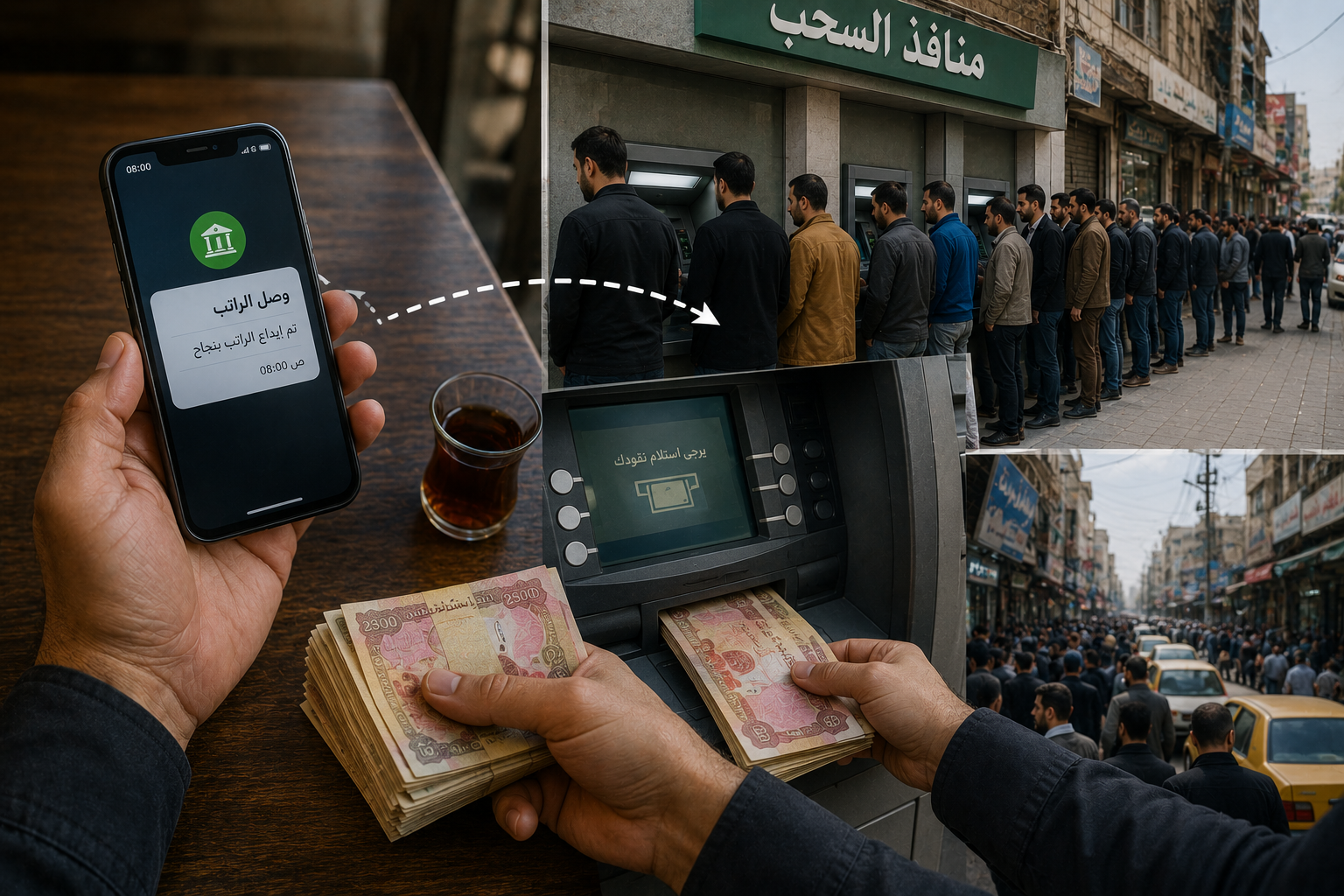
Despite the major expansion of salary localization programs and the spread of bank cards and digital wallets across Iraq in recent years, the scene of instant salary withdrawal continues to repeat itself every payday
Within the first hours of salary deposits, heavy crowds are often seen at:
- Cash withdrawal points
- ATM machines
- Electronic payment offices
- Wallet agents
as employees and users rush to convert their electronically received salaries into cash immediately.
This raises an important question within Iraq’s fintech market:
Why do many Iraqis still prefer holding cash despite the expansion of electronic payments?
Financial Localization Expanded… But Behavior Has Not Fully Changed
Over the past few years, financial localization services have expanded significantly across Iraq, and millions of employees and retirees now rely on:
- Electronic cards
- Digital wallets
- Payment applications
- Bank accounts
However, despite this expansion, many users still treat their cards simply as a tool for receiving salaries rather than as an instrument for everyday financial use.
For this reason, most salaries are quickly converted into cash shortly after being deposited.
Trust Remains the Most Important Factor
One of the biggest reasons behind immediate cash withdrawals is trust.
Many users still feel more comfortable when their money is:
- Physical cash
- Directly in their hands
- Away from technical issues or system failures
especially with recurring concerns related to:
- System outages
- Weak internet connections
- Problems with some applications
- Delayed transactions
- Limited service access in certain areas
For many people, cash still feels like the safest option.
Iraq’s Market Is Still Primarily Cash-Based
Despite the spread of POS devices and digital wallets, a large portion of Iraq’s market still depends heavily on cash transactions.
Many:
- Traditional markets
- Small shops
- Local services
- Daily informal businesses
do not fully rely on electronic payments, pushing users to keep cash available for daily expenses.
In many situations, people still find cash easier and faster to use compared to some digital payment solutions.
Many Users Do Not See a Clear Advantage Yet
Some users believe that electronic cards or wallets offer little practical difference after receiving their salaries.
If:
- Most shops still rely on cash
- Some services do not support electronic payments
- Internet connectivity remains unstable
- Cash withdrawal is easy and accessible
then users naturally return to cash usage.
This highlights an important reality:
Fintech success does not depend only on providing cards or applications, but on building a complete ecosystem where digital usage becomes practical in daily life.
Younger Users Are More Open to Digital Payments
At the same time, younger generations and users familiar with digital applications are increasingly adopting:
- Electronic payments
- Digital wallets
- Online shopping
- Financial apps
particularly in major cities and areas with stronger digital infrastructure.
However, this group still represents only part of the market, not the entire market.
A Digital Economy Requires More Than Salary Localization
Specialists believe salary localization alone is not enough to build a truly digital economy.
Real transformation requires:
- Greater trust in financial services
- Better infrastructure
- Wider POS coverage
- Improved applications and services
- Making digital payments easier than cash itself
This is a stage Iraq is still gradually moving toward.
Could This Behavior Change in the Future?
Current indicators show that digital financial services are gradually expanding across Iraq, especially with the growth of:
- Digital wallets
- Payment applications
- E-commerce
- Everyday digital services
At the same time, cash is likely to remain dominant for quite some time due to the current structure of the Iraqi market.
Conclusion
Despite the expansion of salary localization and electronic financial services in Iraq, many users still prefer withdrawing their salaries immediately and converting them into cash.
This does not necessarily indicate failure of fintech or electronic payments. Rather, it reflects the fact that Iraq remains in a transitional phase between a traditional cash-based economy and modern digital financial services.
As Iraq’s digital infrastructure and electronic services continue evolving, this behavior may gradually change in the coming years. However, building trust will remain the most important factor in this transformation