

Who Really Profits from Digital Payments? A Look into Fintech Business Models
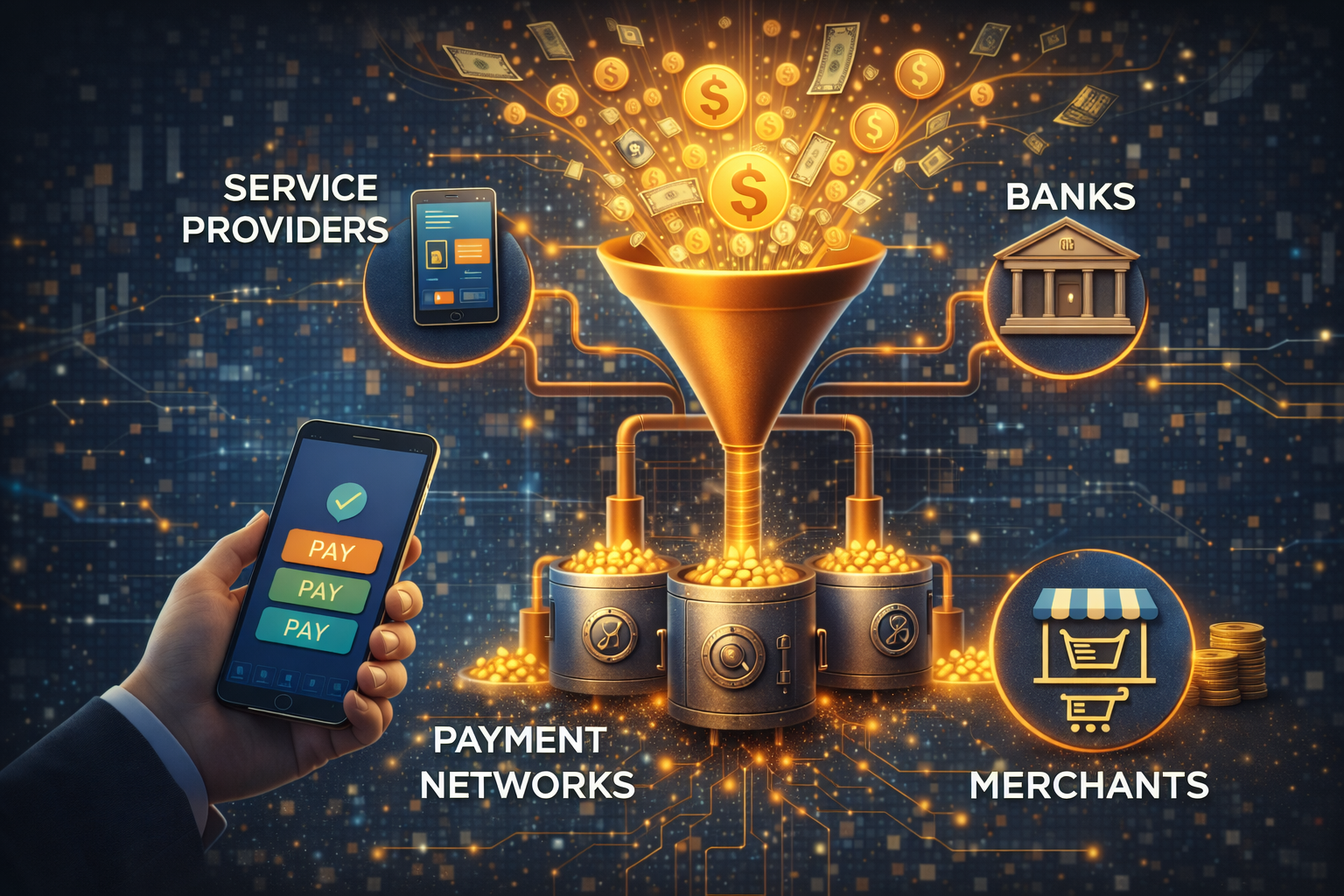
With the rapid expansion of digital payments and financial services, an important question arises: who actually profits from this ecosystem? While end users benefit from fast and convenient services, there is a complex network of stakeholders generating revenue from every digital transaction.
How the Digital Payment Ecosystem Works
A digital payment does not involve just two parties—it includes multiple players, such as:
● The service provider or app
● The bank or financial institution
● The payment network or technical intermediary
● The merchant or service provider
Each of these participants takes a share of the transaction fees, even if these costs are not directly visible to the user.
Revenue Streams in Digital Payments
1. Transaction Fees
Small fees charged on each transfer or payment represent one of the main revenue sources. Although these fees may seem minimal, their accumulation across millions of daily transactions generates substantial income.
2. Merchant Fees
In many cases, merchants bear part of the cost of accepting digital payments, especially when using payment gateways or mobile payment solutions.
3. Value-Added Services
Fintech companies often offer premium services, such as:
● Instant transfers
● Immediate cash withdrawals
● Advanced account management tools
These services create additional revenue streams.
4. Data and Analytics
Financial data is one of the most valuable assets in fintech. It can be used for:
● Analyzing user behavior
● Offering personalized services
● Improving financial decision-making
Does the User Actually Pay?
Although many services appear to be free, users often pay indirectly—either through transaction fees or through higher prices passed on by merchants who absorb part of the digital payment costs.
Why Do These Companies Continue to Grow?
The main driver is scale. Fintech companies rely on:
● Number of users
● Volume of transactions
● Speed of market expansion
The more transactions processed, the higher the total revenue—even if individual fees remain small.
What Does This Mean for the Future of Fintech?
This model shows that the future of fintech is not just about offering services, but about building an integrated ecosystem that connects users, merchants, and financial institutions within a unified system.
Conclusion
Digital payments are not merely a convenient way to complete transactions—they represent a full economic system where profits are distributed across multiple players.
Understanding this model provides deeper insight into the future of the fintech sector, especially as digital financial services continue to expand globally.