

What Would Happen to Iraqi Fintech if the Internet Disappeared for 24 Hours?
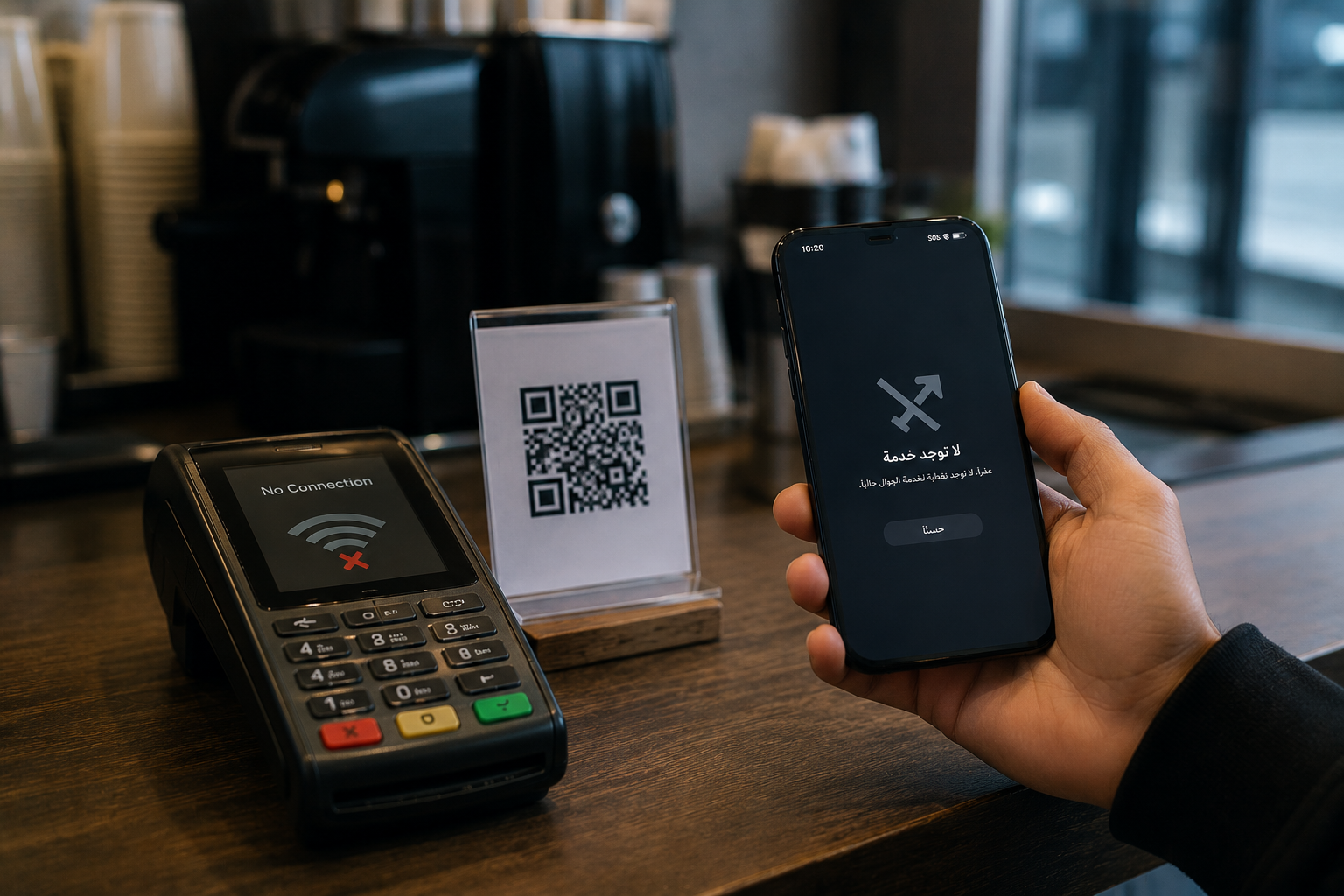
As discussions around digital transformation continue to grow in Iraq, electronic wallets, digital payments, delivery applications, and mobile-based financial services are increasingly praised as key pillars of the country’s evolving digital economy
Yet there is one question that is rarely asked:
What would happen if the internet disappeared for just 24 hours?
At first glance, the question may seem hypothetical. However, it reveals an important reality about the modern digital economy.
Virtually every digital service we use today depends, directly or indirectly, on a continuous connection to the internet.
As the fintech sector expands, the internet is no longer simply a tool for accessing information—it has become part of the financial infrastructure itself.
When the Internet Stops, What Stops With It?
Over the past few years, Iraqi consumers have increasingly relied on digital services in their daily lives.
A growing number of payment transactions, money transfers, mobile top-ups, and financial management activities are now conducted through applications and digital wallets.
However, most of these services require a live internet connection to function properly.
In the event of a widespread or prolonged outage, many digital platforms could face difficulties delivering their services as users have come to expect.
This highlights an important reality that often goes unnoticed:
The more digital an economy becomes, the more dependent it becomes on digital infrastructure.
Digital Wallets Face a Real Stress Test
A significant portion of digital wallet activity relies on constant connectivity.
Transfers, authentication processes, balance updates, and payment transactions all depend on real-time data exchange.
If connectivity is disrupted, users may suddenly find themselves facing a very different experience from the one they are accustomed to.
In such cases, the issue is not necessarily with the wallet itself, but with the digital environment that supports it.
What About Electronic Payment Terminals?
The use of POS (Point-of-Sale) terminals has expanded significantly across Iraqi markets and businesses in recent years.
Yet these devices also rely, to varying degrees, on network connectivity to process and verify transactions.
As a result, any widespread disruption in internet services could directly affect the digital payment experience.
The greater the share of digital payments within the economy, the more critical stable infrastructure becomes.
Delivery Apps and E-Commerce
The impact extends beyond digital wallets.
Many delivery platforms and e-commerce services depend on internet connectivity to manage orders, track drivers, process payments, and communicate with customers.
A large-scale outage could therefore affect a substantial portion of the digital activity surrounding these platforms.
This demonstrates how closely fintech has become intertwined with the broader digital economy.
Has the Internet Become Part of Financial Infrastructure?
In the past, the internet was viewed primarily as a telecommunications service.
Today, for the digital economy, it increasingly resembles electricity networks, water systems, or other forms of essential infrastructure that entire sectors rely upon.
Every digital payment, electronic transfer, or smart financial service ultimately passes through a digital network.
As fintech continues to grow, this dependence will only become more significant.
The New Paradox
Digital transformation brings greater speed, efficiency, and flexibility to the economy.
At the same time, however, it creates a new form of dependency.
The more digital services become, the more reliant they are on stable networks and resilient infrastructure.
This does not mean digital transformation is a problem.
Rather, it highlights that success depends not only on innovative applications and services but also on the ability of infrastructure to support continuous growth.
Conclusion
A 24-hour internet outage may initially appear to be nothing more than a technical inconvenience.
However, in an economy that increasingly depends on digital payments and electronic financial services, those hours could become a real test of the readiness and resilience of the entire digital ecosystem.
Perhaps the more important question today is not:
How many digital wallets exist in Iraq?
But rather:
Is Iraq’s digital infrastructure ready for the growing level of dependence being placed upon it?
Because the future of fintech depends not only on the number of users or the launch of new services, but also on the strength and reliability of the networks that power the digital world behind them.