

SwiftPayIQ Under the Microscope: Is the Issue Rooted in Infrastructure or Operational Shortcomings?
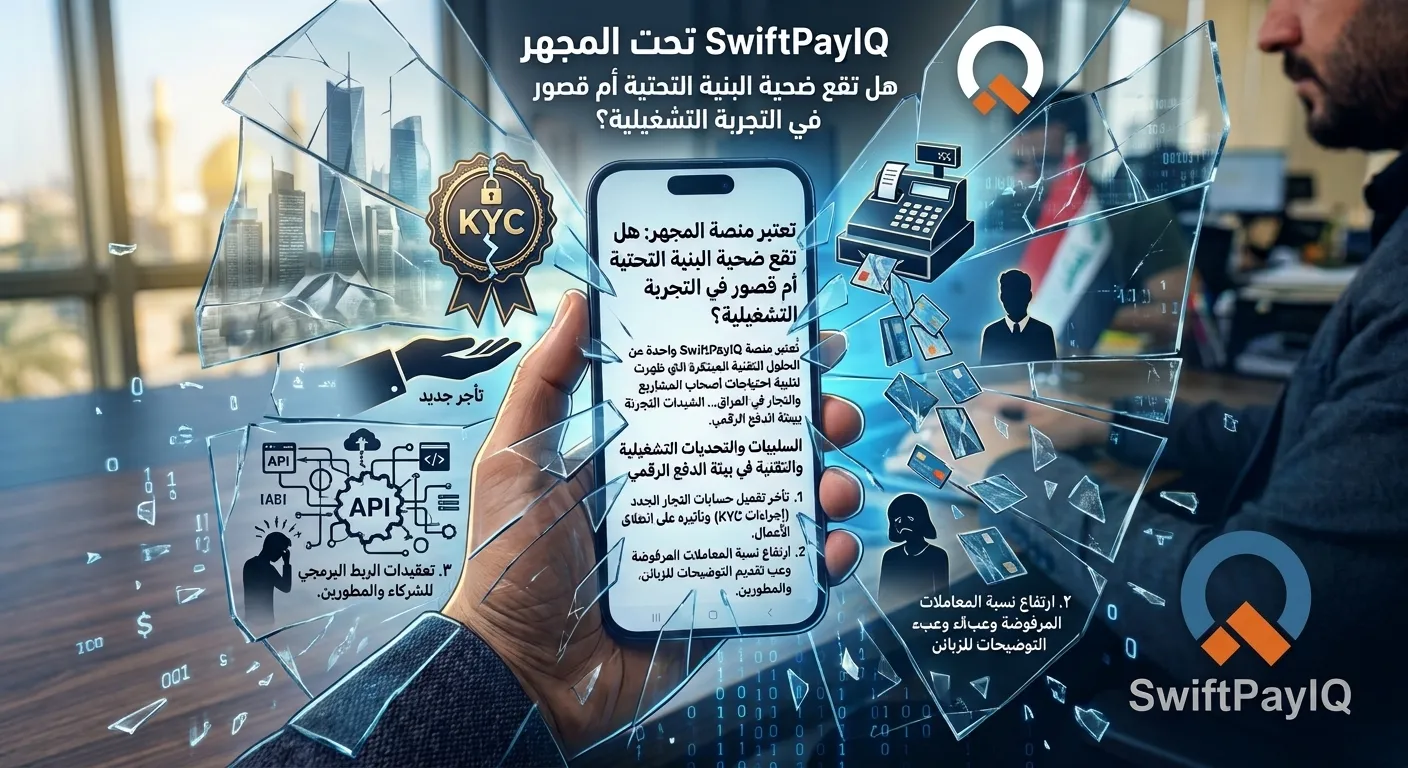
SwiftPayIQ is an innovative technical solution designed to meet the needs of entrepreneurs and merchants in Iraq by streamlining electronic invoicing and the creation of quick payment links. While the platform boasts software stability and utilizes modern infrastructure to facilitate digital commerce, the user experience—for both merchants and customers—is hindered by certain operational and technical challenges, as well as drawbacks inherent to the broader electronic payment landscape in the country.
SwiftPayIQ is an innovative technical solution designed to meet the needs of entrepreneurs and merchants in Iraq by streamlining electronic invoicing and the creation of quick payment links. While the platform boasts software stability and utilizes modern infrastructure to facilitate digital commerce, the user experience—for both merchants and customers—is hindered by certain operational and technical challenges, as well as drawbacks inherent to the broader electronic payment landscape in the country.
Based on performance assessments and operational realities, one of the primary obstacles for new merchants arises during the account activation and Know Your Customer (KYC) verification process. Because the platform functions as a technical intermediary rather than a direct payment gateway, account approval is not instantaneous; instead, it requires a thorough review and detailed verification of official documentation by licensed payment gateways and financial partners—all of whom operate under the regulations of the Central Bank of Iraq. This results in delays in account activation and the ability to begin receiving funds, creating an administrative bottleneck that hampers the launch of business operations in their early stages.
Regarding daily transactions, the rejection of payments is one of the most common issues encountered when using the platform’s payment links. This negatively impacts conversion rates and merchant sales. In many cases, such rejections are not due to a malfunction within the platform itself, but rather to factors related to the customers' own bank cards. Issues such as the failure to activate online shopping services for Visa or Mastercard cards—whether by the cardholder or the issuing bank—or exceeding daily withdrawal limits, along with temporary fluctuations in the financial processing networks of local banks, often appear to the end user as problems originating from the platform or the merchants themselves. This forces the platform and merchants to constantly provide explanations to their customers.
Regarding API integration, website and application developers face challenges related to configuring integration settings and testing within a "sandbox" environment before going live. This process requires high precision in setting up security keys and testing automated invoice responses; even a minor programming error by a developer can prevent an order’s status from updating after a transaction is completed, which disrupts order and inventory management. Furthermore, because the platform is entirely dependent on the infrastructure of banks and payment providers, its services are directly affected by any outages or maintenance within national financial processing networks—issues that the platform itself cannot resolve.
Evidence suggests that the platform does not suffer from inherent structural flaws or internal service outages; rather, the difficulties encountered are simply the typical challenges and drawbacks associated with the digital payment sector in Iraq.