
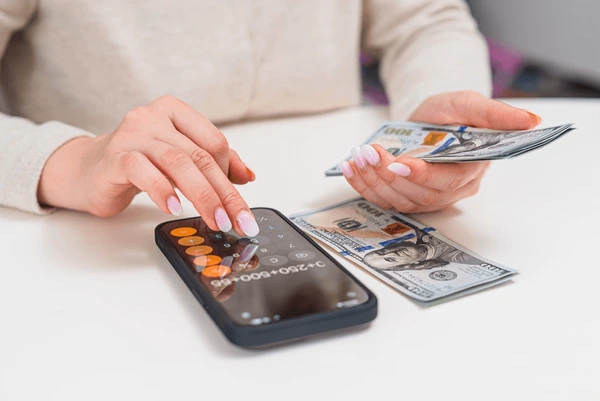
person holding cash using smartphone crisis concept
Economic crises do not only affect prices and income; they also have a direct impact on individual financial behavior—especially how people pay and manage their money. In Iraq, where the economy is influenced by factors such as oil price fluctuations and financial instability, users tend to become both more cautious and more adaptable. This shift is clearly reflected in the use of electronic payments, digital wallets, and cash, making it essential to understand these changes when analyzing the future of financial technology in the country.
From Spending to Caution: Changing Priorities
During periods of stability, users tend to spend more freely and use a variety of payment methods. However, in times of economic crisis, this behavior changes significantly:
● Reducing non-essential expenses
● Focusing on necessities (food, housing, services)
● Monitoring spending more closely
This shift drives users to seek tools that help them better control their finances—something financial apps are designed to provide.
Do Crises Increase the Use of Digital Payments?
The answer: Yes… but with conditions
Economic crises can encourage the use of digital payments for several reasons:
1. Need for Expense Control
Financial applications provide detailed transaction records, helping users track every unit of money spent.
2. Reducing Risks Associated with Cash
During unstable periods, some users prefer keeping their money in digital form rather than carrying cash.
3. Greater Reliance on Digital Services
Increased use of delivery and online shopping services during crises boosts the adoption of digital payments.
But… Why Do Some Users Return to Cash?
Despite these factors, some users revert to cash during crises due to:
1. Loss of Trust
Economic instability can raise concerns about financial systems, prompting users to hold cash.
2. Immediate Liquidity
Cash provides a sense of direct control, especially in uncertain times.
3. Limited Access to Services
In some areas, digital financial services may not be sufficiently available.
A New Behavior: “Hybrid Payments”
One of the most notable trends in Iraq is the emergence of a hybrid payment model:
● Digital payments are used for larger or formal transactions
● Cash is retained for small, everyday purchases
This behavior reflects a transitional phase between a cash-based and a digital economy.
Impact on Financial Companies
Changes in user behavior also affect fintech companies:
● Increased demand for money management services
● Greater need to build user trust
● Development of solutions tailored to economic conditions (such as flexible payments or installment options)
Companies that understand and adapt to these changes are more likely to succeed.
What Does This Mean for the Future of Fintech in Iraq?
Despite their challenges, economic crises can accelerate digital transformation if leveraged correctly.
We can expect to see:
● Gradual growth in the use of digital financial tools
● Higher demand for transparency and financial control
● Development of services that help users adapt to economic conditions
Conclusion
Economic crises do not just change income levels—they reshape how people interact with money. In Iraq, this shift is reflected in a careful balance between cash and digital payments, as users seek security, control, and flexibility.
As this transformation continues, financial technology will play a crucial role in helping individuals adapt to challenges and build more informed and stable financial behaviors.