
Number of Payment Companies and E-Wallets in Iraq: Rapid Expansion with Impact Beyond Numbers
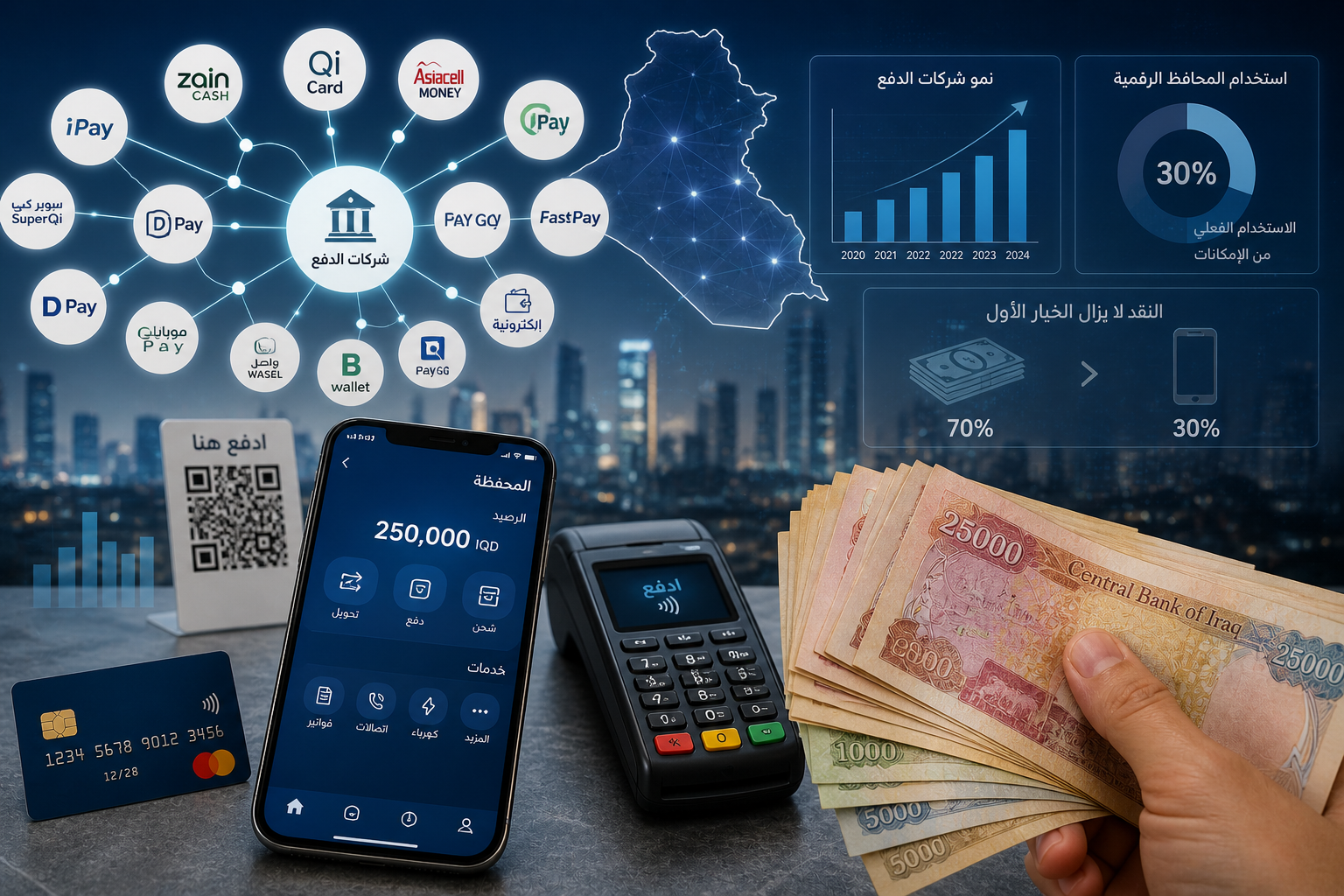
Iraq’s fintech sector is experiencing rapid growth in recent years, driven by the increasing number of electronic payment companies and the expansion of digital wallets. This growth is no longer just about numbers—it reflects a gradual shift in how money is managed in the Iraqi market, signaling a clear move toward a digital economy and reduced reliance on cash
How Many Payment Companies and E-Wallets Are There in Iraq?
According to market data and estimates based on the direction of the Central Bank of Iraq:
- There are approximately 15 to 20 electronic payment companies operating in Iraq
- There are حوالي 10 to 15 digital wallets offering direct services to users
Important Note:
These figures are presented as approximate ranges because the market is continuously evolving due to:
- New licensing approvals
- Company expansions
- Differences in service types and business models
What Is the Difference Between Payment Companies and E-Wallets?
Electronic Payment Companies
- Provide payment infrastructure
- Manage transaction processing and transfers
- Offer payment gateways for merchants
Digital Wallets
- User-facing applications
- Store money digitally
- Enable payments, transfers, and mobile top-ups
In simple terms:
Companies build the system… wallets are what people use.
What Has Actually Changed in the Iraqi Market?
Despite the continued dominance of cash, the expansion of payment companies and digital wallets has led to noticeable changes:
1. Expanding Access to Financial Services
A large segment of the population can now:
- Send and receive money
- Make digital payments
- Access financial services
—all without needing a traditional bank account.
2. Digital Payments Enter Daily Life
Digital payments are no longer limited to major services—they are now present in:
- Retail stores
- Restaurants
- Delivery services
- Digital subscriptions
3. Supporting E-Commerce in Iraq
Payment companies have provided:
- Payment gateways
- App-based payment solutions
- Merchant tools
This has contributed to the growth of local e-commerce.
4. Faster Financial Transactions
Key improvements include:
- Money transfers within seconds
- Easy bill payments
- Managing finances via mobile apps
This reduces reliance on traditional cash transactions.
Is the Number of Companies Enough to Change the Market?
Despite a solid number of companies, the biggest challenge remains:
User Behavior
- Cash usage is still high
- Wallet usage is below its full potential
- Some users prefer withdrawing cash instead of paying digitally
This means:
The issue is not the availability of services… but their actual usage.
What Do These Numbers Really Reflect?
The increase in payment companies and digital wallets indicates that Iraq has entered a stage of:
- Building digital financial infrastructure
- Expanding fintech services
- Beginning the transition toward a less cash-dependent economy
However:
Full transformation depends not on numbers alone, but on real usage.
Is Iraq Moving Toward a Digital Economy?
Yes—but gradually.
Current indicators show:
- Expansion of companies
- Wider service availability
- Increased awareness
But full transformation requires:
- Building user trust
- Improving service experience
- Increasing daily reliance on digital payments
Conclusion
Iraq’s electronic payment sector is no longer in its early stages—it has entered a phase of expansion and adoption. With up to 20 payment companies and a wide range of services, the foundational infrastructure is already in place.
However, the real challenge is no longer the number of companies…
It is:
turning this expansion into consistent, everyday usage