

If Digital Payments Are Available, Why Do Iraqis Still Prefer Cash on Delivery?
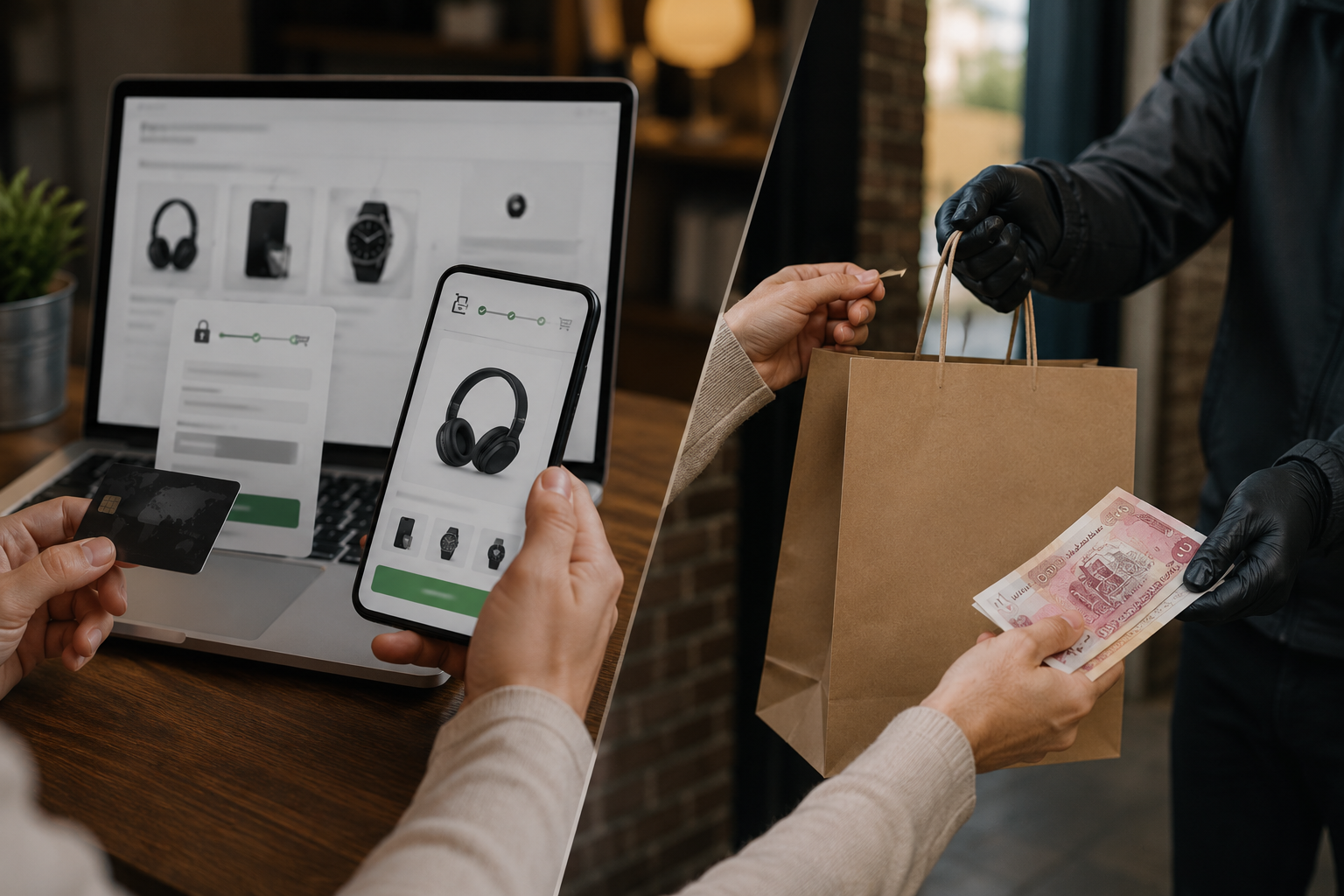
Over the past few years, Iraq has witnessed significant growth in digital payment services. Digital wallets have become more widespread, the number of payment cards has increased, online payment gateways have evolved, and delivery platforms and e-commerce stores now offer multiple online payment options
Despite all this progress, Cash on Delivery (COD) remains the preferred payment method for a large segment of Iraqi consumers.
This raises an important question:
If digital payment tools are readily available, why do many Iraqis still prefer to pay only when the product arrives?
At first glance, the answer may seem related to technology, infrastructure, or the availability of financial services. In reality, however, the issue runs much deeper.
It is not simply about payment methods—it is about a complex relationship between trust, marketing, customer experience, and consumer behavior.
Trust Comes Before Technology
In many developed markets, paying online before receiving a product has become a standard practice.
In Iraq, however, many consumers still prefer to see the product first and pay afterward.
This does not necessarily reflect resistance to technology or an inability to use digital payment solutions.
More often, it reflects a matter of trust.
Consumers want to be sure that the product will actually arrive.
They want confirmation that the item matches the description and expectations.
They want reassurance that their money will not leave their hands before they receive what they ordered.
For many users, cash on delivery provides a greater sense of control over the purchasing process.
Cash on Delivery Is More Than a Payment Method
One common mistake is to view cash on delivery simply as a competitor to digital payments.
In reality, it has become an important sales strategy for many e-commerce businesses.
When a customer sees the phrase:
(Order now and pay on delivery,(
a significant portion of their hesitation immediately disappears.
In this case, the merchant is not merely offering a payment option—it is offering reassurance.
The customer knows that:
- They will not pay if the product never arrives.
- They will not lose money if the order is canceled.
- They can reject the product if it does not meet expectations.
- They do not need to share financial information in advance.
This approach has helped attract large numbers of customers and has played an important role in the growth of Iraqi e-commerce over the past several years.
Did Cash on Delivery Help E-Commerce Grow?
The question may sound surprising.
However, it is reasonable to argue that cash on delivery played a major role in building initial trust between consumers and online merchants.
During the early stages of e-commerce growth, many users were hesitant to purchase products online.
Cash on delivery reduced that hesitation and encouraged first-time customers to try digital shopping.
In that sense, COD may have been one of the key factors that enabled Iraqi e-commerce to expand and reach a broader audience.
But There Is Another Side to the Story
Despite its marketing advantages, cash on delivery presents real challenges for businesses, merchants, and digital platforms.
COD often means:
- Higher operational costs.
- More complex cash management.
- Greater risk of order cancellations after shipment.
- Delayed revenue collection.
- Additional burdens on delivery companies.
By contrast, digital payments allow financial transactions to be completed faster and more efficiently.
This is why many companies around the world encourage customers to pay online in advance through discounts, rewards, cashback programs, and exclusive offers.
Is the Problem Digital Payments or the Shopping Experience?
The discussion is often framed as a battle between cash and digital payments.
In reality, the situation is more nuanced.
Consumers do not always choose a payment method based on the technology behind it.
Instead, they choose based on the level of trust they have in the entire purchasing experience.
If customers trust:
- The merchant,
- The product quality,
- The return and refund process,
- And customer support,
they are far more likely to use digital payment methods.
However, when these elements are weak, cash on delivery remains the more attractive option regardless of how many digital wallets or payment cards are available.
What Does This Mean for Fintech?
For fintech companies, the challenge goes beyond simply building payment solutions.
The real challenge is creating an environment where users feel comfortable using them.
Success in fintech is not driven by technology alone.
It also depends on customer experience, transparent return policies, merchant reliability, and the level of confidence consumers feel throughout the purchasing journey.
Conclusion
Despite the continued expansion of digital payment services in Iraq, cash on delivery remains highly attractive to many consumers.
The reason is not necessarily that Iraqis reject technology or lack the ability to use it.
Rather, cash on delivery has succeeded in providing something that technology alone cannot guarantee:
Trust.
Perhaps the most important question today is not:
Why don’t Iraqis use digital payments more often?
But rather:
Have online stores and digital platforms built enough trust to convince consumers to pay before they see what they have purchased?
In the end, the battle for trust may be far more important than the battle over payment methods themselves