

Fintech in Iraq: How the "Super K" App Dismantles the Bureaucracy of Bank Advances
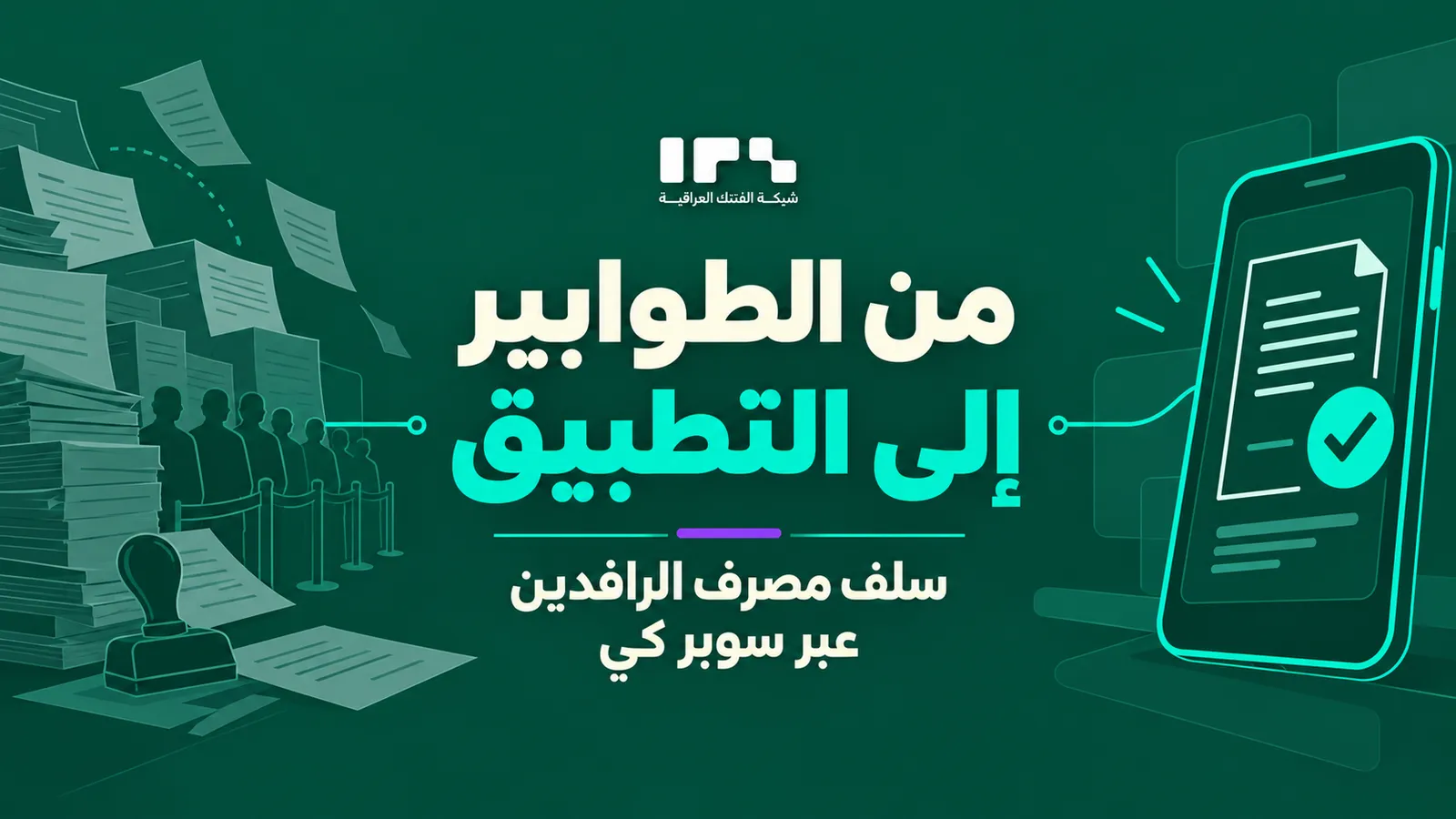
The Ministry of Finance and Rafidain Bank have launched a financial loan service for employees and retirees via the "SuperQi" app. This article examines how FinTech solutions break down bureaucracy, eliminate intermediaries, and enhance financial inclusion and service quality in Iraq.
How Is FinTech Dismantling Contractual Bureaucracy? An Analysis of Al-Rafidain Bank’s Initiative via "SuperQi"
If you want to understand how FinTech can spark a quiet revolution in a society, look beyond Silicon Valley or London. Consider the moment when Iraq’s oldest and largest traditional state-owned bank decides to replace long, exhausting queues with a smartphone application.
The Ministry of Finance and Al-Rafidain Bank have announced the launch of a financial advance (loan) service for public sector employees and retirees through the "SuperQi" app, processing 5,000 applications per daily batch. At first glance, this might appear to be merely an "administrative service update," but it actually represents a pivotal shift in Iraqi banking philosophy: a transition from cumbersome, paper-based transactions to platform-based banking.
1. Dismantling Bureaucracy with Code
For decades—dating back to the 1960s—banking was defined by a "physical place" where one would spend hours navigating signatures, official stamps, and manual inquiries. Yet, paper-based processes do not create a robust, efficient system; instead, they breed bureaucracy, sluggishness, and subtle opportunities for administrative corruption.
By shifting the loan application process to a smart application like "SuperQi," automation achieves the following:
Eliminating human subjectivity: Algorithms for verification and electronic credit checks do not show favoritism or bias; they apply terms and conditions with speed and impartiality. Eliminating Intermediaries: The bank’s warning against "middlemen and opportunists" illustrates how digital transparency is dismantling the market for brokers who once profited from the complexities of traditional transactions.
"Fintech does more than just digitize transactions; it restores dignity to the individual and reclaims the precious time once wasted standing in queues."
2. The Batch System (5,000 Applications): A Model of Smart Partnership and Banking Agility
One might ask: Why limit each batch to 5,000 applications?
From the perspective of smart fintech, this is not a restriction, but rather professional "load management"—a strategy for processing large volumes of data without crashing servers or overwhelming audit staff.
It serves as an advanced transitional phase between:
Legacy Systems: Which require manual document verification and cautious credit procedures.
Digital Velocity: Which ensures the immediate, continuous, and daily disbursement of funds into the accounts of eligible recipients.
This partnership between a state institution (Rafidain Bank) and an advanced fintech infrastructure (Super K) exemplifies the concept of "Open Banking" in its best local form.
3. Human-Centric Financial Inclusion: When Technology Serves Humanity
The ultimate goal of fintech is not merely to write elegant lines of code, but to achieve financial inclusion. When a retiree or an employee in one of Iraq’s remote provinces can request a loan advance with the click of a button from the comfort of their own home—with the funds arriving directly onto their smart card—we have successfully achieved the following objectives:
Improving quality of life: Reducing the physical and mental strain, as well as the financial costs, associated with travel.
Integrating the cash-based economy with the digital economy: Increasing public trust in electronic cards and cashless transactions (moving toward a "cashless society").
Accelerating the economic cycle: Ensuring a smooth, daily flow of liquidity within the local market, free from bottlenecks.
A final word: The future belongs to innovative institutions.
The initiative taken by the Ministry of Finance and Rafidain Bank is more than just a way to facilitate a loan advance; it is clear proof that bureaucracy is not an inevitable, permanent state, but rather a consequence of lacking the right tools. By introducing FinTech solutions, complex hurdles dissolve, ultimately benefiting the citizen.
Today, Iraq is firmly establishing its place on the region’s financial innovation map. The next challenge lies in transforming all government financial services into seamless, human-centric digital experiences that are accessible to everyone.