

Fintech Beyond Banks: Where Is It Actually Used in the Iraqi Market?
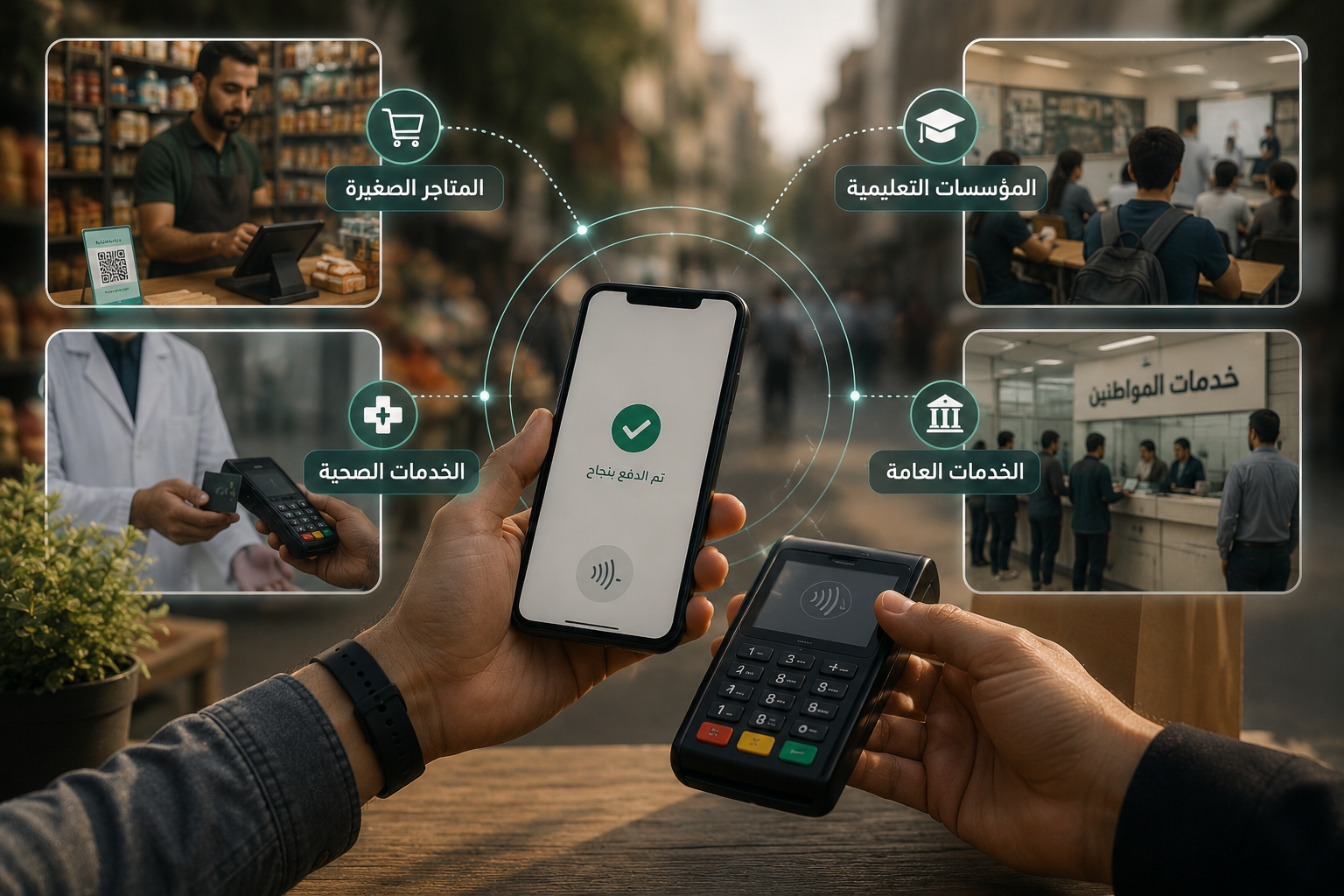
Financial technology is no longer limited to banks or digital wallets in Iraq. It is increasingly visible across multiple sectors of daily life. This expansion reflects a shift from fintech being a standalone financial service to becoming part of the everyday economic infrastructure
Expansion Beyond the Traditional Framework
In recent periods, digital payment tools have started appearing in various sectors, including:
- Small retail stores
- Educational institutions
- Some healthcare services
- Public services
This spread is not driven only by awareness, but by the growing need to simplify everyday financial transactions.
From Financial Service to Daily Tool
One of the most important transformations in the Iraqi market is that fintech is no longer used only when needed—it is becoming a daily tool tied to services.
Users are no longer focused on the technology itself, but on how easily they can complete a transaction, whether it is a payment or a money transfer.
What Is Driving This Expansion?
Several key factors have enabled fintech to enter these sectors:
- Widespread use of smartphones
- Simplicity of mobile applications
- Expansion of payment acceptance points (POS)
- The need for faster and more efficient transactions
These factors have brought fintech closer to users than ever before.
The Real Challenge
Despite this expansion, usage remains uneven across sectors. Some areas show clear progress, while others still rely heavily on cash.
This raises an important question about the market’s ability to achieve a comprehensive transformation, rather than a partial one.
Conclusion
Fintech in Iraq is no longer confined to banks—it is gradually spreading across multiple sectors.
This expansion represents an important step forward, but it will require time before it becomes a consistent behavior across all areas of the economy