

Everyday Services Have Become the Real Driver of Fintech Growth in Iraq
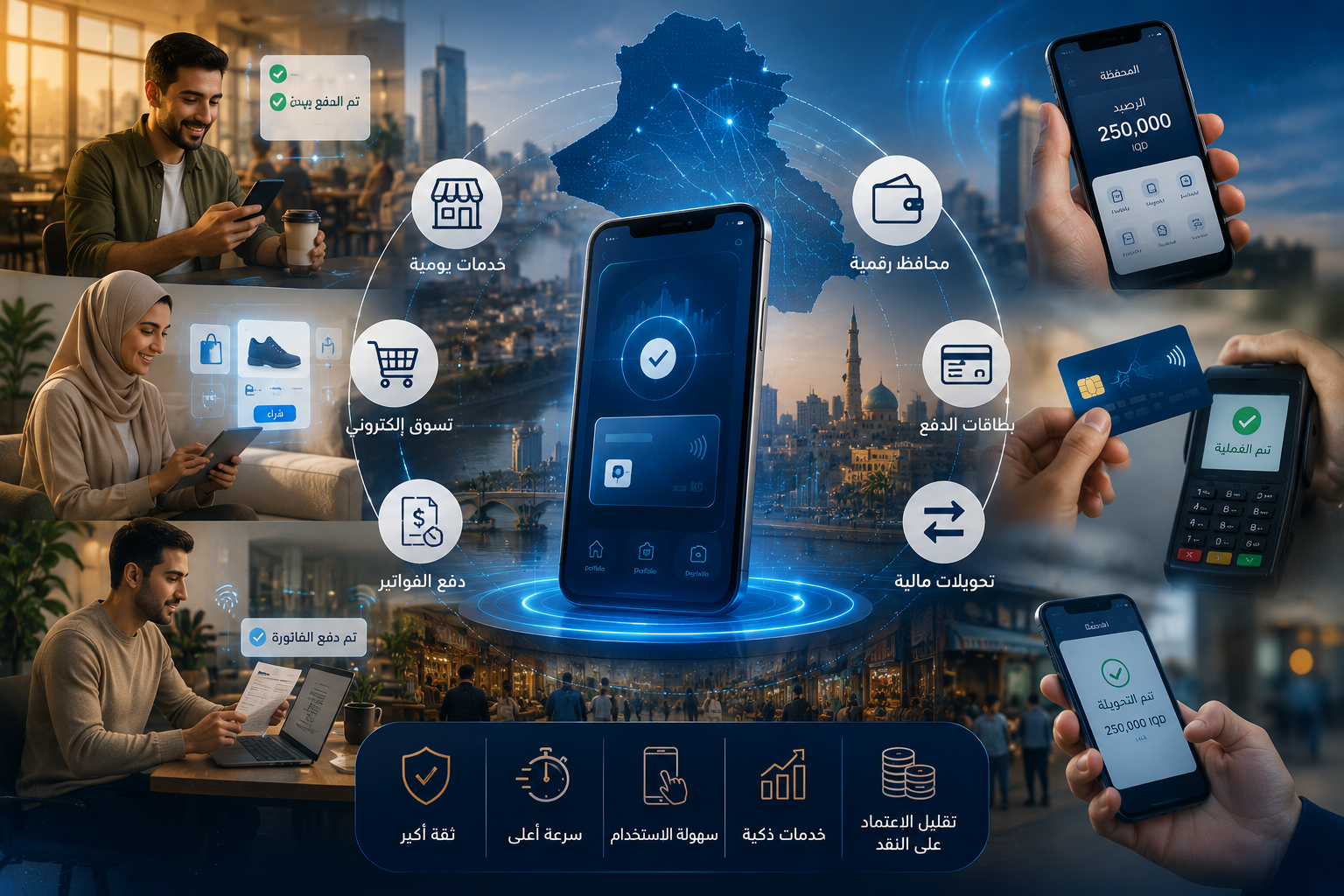
A few years ago, discussions about financial technology in Iraq were mostly linked to banks, banking cards, and money transfers. Whenever someone heard the word “fintech,” they immediately imagined a financial application or a digital wallet. But recently, this perception has gradually started to change within the Iraqi market
Today, fintech is no longer limited to financial applications alone. It has quietly—but rapidly—become integrated into the details of everyday life. Many Iraqi users may not fully notice it, but they are now interacting with fintech-related services more than ever before.
When someone orders a service through an app, pays a bill electronically, or uses a card instead of cash, they are effectively interacting with part of the fintech ecosystem—even if they do not think about it that way.
The real transformation did not begin only through banks. It started through everyday services that people constantly rely on. The applications and platforms that succeeded in the market were often those that solved a simple daily problem quickly and conveniently, rather than offering only complex financial services.
This is what brought financial technology closer to ordinary users. Many people may not care about concepts like the digital economy or financial transformation, but they do care about faster service, easier payments, and fewer procedures. And this is exactly where digital services began spreading.
For many years, a large portion of transactions depended entirely on cash—and this is still true to a certain extent today. The difference is that the market has started witnessing gradual changes in user behavior, especially among younger people and those accustomed to applications and digital services.
Some users now prefer paying through mobile phones or cards instead of carrying cash all the time, not only because of changing attitudes, but because certain services have become faster and more convenient when digital payments are used.
At the same time, clear challenges still affect this transformation. Trust remains a barrier for part of the population, alongside infrastructure issues, inconsistent internet quality, and the long-standing dependence on cash within the Iraqi market.
Even so, current indicators show that fintech is moving beyond its traditional framework. It is no longer limited to digital wallets or banking apps—it is gradually entering multiple sectors indirectly through the everyday services citizens use regularly.
This may be the most important factor shaping the future of fintech in Iraq. The success of financial technology will not depend only on the number of cards or wallets issued, but on its ability to integrate naturally and smoothly into daily life.
The more digital services become part of everyday routines, the greater the chances that electronic payments and digital transactions will evolve into stable social behavior rather than temporary experiments or optional alternatives.
Although Iraq is still in a transitional phase, what is happening today shows that the market is gradually moving toward a model more dependent on technology and digital services, even if this transformation is progressing more slowly than in some other countries.
In the end, everyday services appear to have become the real engine behind fintech growth in Iraq because they are the closest to the user—and the most capable of gradually reshaping how people interact with money and services over time