

Does Weak Internet Infrastructure Hinder Iraqi Fintech More Than Regulations?
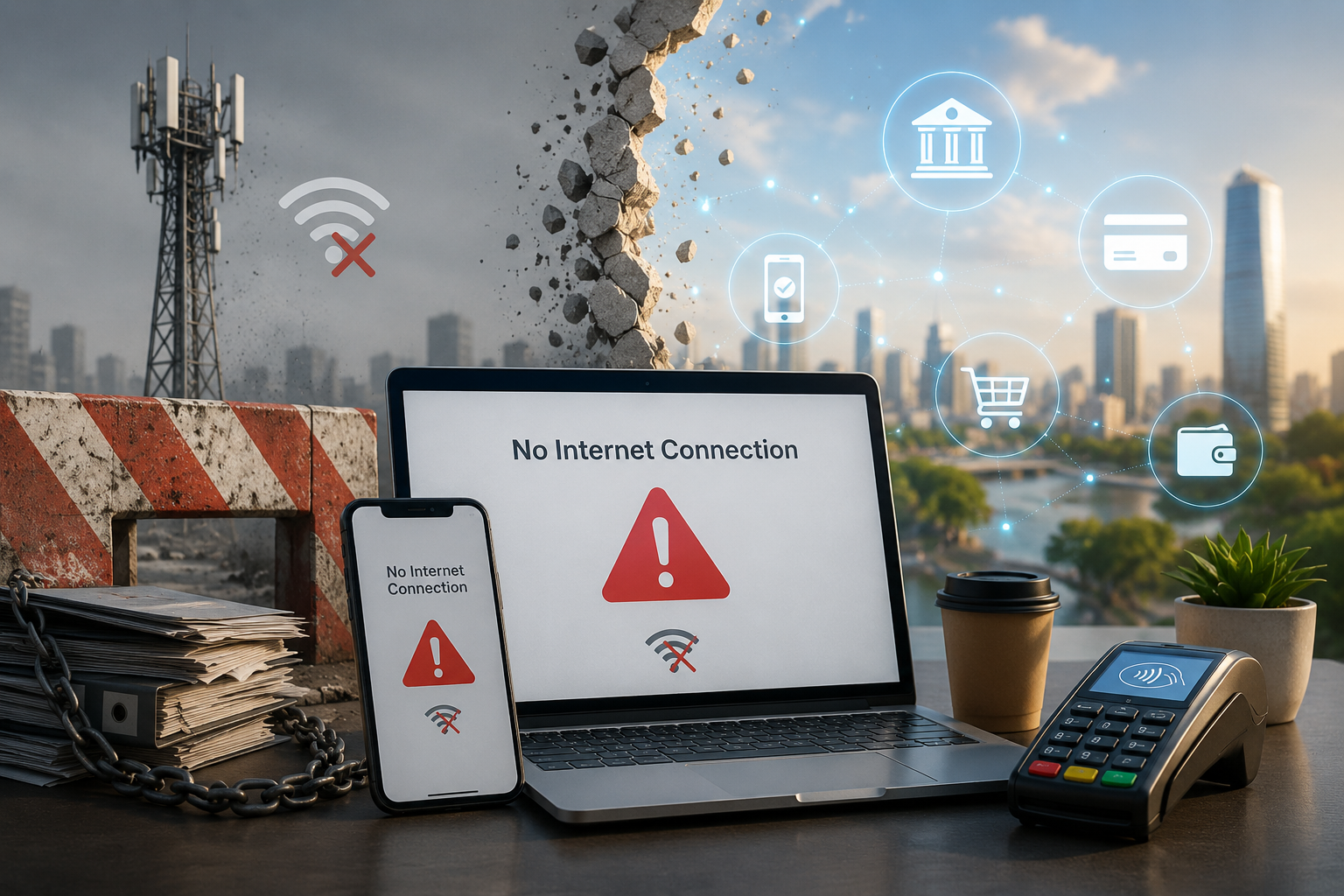
Over the past few years, Iraq has attempted to position itself as one of the emerging markets in fintech and digital transformation. Digital wallets are expanding, POS devices are becoming more widespread, delivery applications are entering the payment space, and banks have begun focusing more on digital services instead of relying solely on traditional branches
But behind this entire scene lies a problem every Iraqi user knows very well — a problem experienced daily at home, on the streets, in restaurants, stores, and even during the simplest payment transaction:
The Internet.
While most official discussions surrounding Iraqi fintech focus on regulations, licensing, investments, and financial reforms, the issue users actually face may be much simpler — and far more embarrassing for the market itself:
How can a digital economy be built when the connection itself is unstable?
In Iraq, an entire payment transaction may stop because of weak connectivity. A delivery request may fail because the application lost connection. A long queue inside a store may freeze simply because the POS device is loading.
And this is where the real problem begins.
Because users do not care whether the issue comes from the bank, the telecom company, the application, or the internet provider.
They see only one result:
The service does not work properly.
Iraqi Fintech Collides Daily With Technical Reality
Today, many companies speak about:
- Digital transformation
- Cashless economies
- The future of payments
- Smart services
But the daily reality inside Iraq still looks very different from the polished image being marketed.
Sometimes, electronic payment feels slower than cash itself.
The Iraqi user wants a service that is fast, clear, and stable. Users do not want to retry a transaction three times before it succeeds, nor hear the phrase:
The network is weak, please try again later.
And with repeated experiences like this, trust begins to erode gradually.
This is an extremely sensitive issue in any fintech market.
Because fintech does not depend only on the existence of an application, card, or payment device — it depends on whether users feel the service can be trusted every single day without problems.
The Problem Goes Beyond Applications
Sometimes a specific application or company gets blamed whenever a service fails, but the reality is much deeper than that.
Iraqi fintech today depends on an entire infrastructure ecosystem that still suffers from chronic problems, including:
- Internet quality
- Electricity supply
- Network stability
- Traffic congestion
- Coverage quality
- Slow response times
A small failure anywhere in this chain can instantly become a bad experience for the user.
This is why some digital services in Iraq still appear unstable, even when the core idea behind them is strong.
And in some areas, users still feel that cash is safer and less complicated than entering a digital experience that may collapse because of weak connectivity.
POS Devices Exposed the Scale of the Problem
One of the clearest examples exposing Iraq’s digital infrastructure reality is the spread of POS devices.
The concept seems simple:
A card, a device, a few seconds — and the transaction is completed.
But reality is often very different.
Inside some stores and restaurants, transactions may take too long, fail entirely, or stop because of poor connectivity.
During peak hours, electronic payment can shift from being a tool that speeds up service into a source of frustration for both employees and customers.
Some business owners have started treating POS devices as an additional option rather than a primary payment method — not because they oppose digital payments, but because they do not always trust the system’s stability.
And this may be even more dangerous than regulatory problems themselves.
Because laws can be changed through decisions…
But rebuilding lost user trust may take years.
Delivery Applications Have Entered the Same Crisis
Even delivery applications, which have become part of daily life for many Iraqis, depend almost entirely on connection quality.
Drivers need internet access for:
- Location tracking
- Receiving orders
- Updating delivery status
- Communication
- Processing payments
Any weakness in the network can directly damage the entire experience.
The issue here is that users do not separate the application from the internet itself.
If the order is delayed or payment fails, the result is the same in the user’s mind:
The service is bad.
This makes digital infrastructure a critical part of Iraq’s fintech future, even if it does not receive the same attention as investments and new applications.
Has the Internet Become the Weakest Point in Iraq’s Digital Transformation Project?
A question is now gradually emerging inside the Iraqi market:
Is the real problem facing Iraqi fintech the regulations… or the technical environment itself?
Because any discussion about:
- Cashless societies
- Digital economies
- Smart financial services
- Advanced applications
will remain limited if users cannot complete stable payment transactions consistently.
More dangerously, some companies are building highly advanced services on top of infrastructure that still struggles with basic issues.
This is where the gap appears between the digital image being promoted and the actual experience users live every day.
Conclusion
Iraq possesses a massive market capable of growth in fintech, and Iraqi users today are more willing to experiment with digital services than they were years ago.
But real expansion will not depend only on the number of applications, wallets, or POS devices available in the market.
It depends on a much simpler question:
Do these services actually work reliably?
Because digital economies are not built through advertisements alone, nor by the number of devices placed inside stores, but through infrastructure that gives users confidence the service will work every time they need it.
And perhaps this is why, for many Iraqis, cash still feels: