

Digital Fraud in Iraq: Who Protects Users When Their Money Disappears?
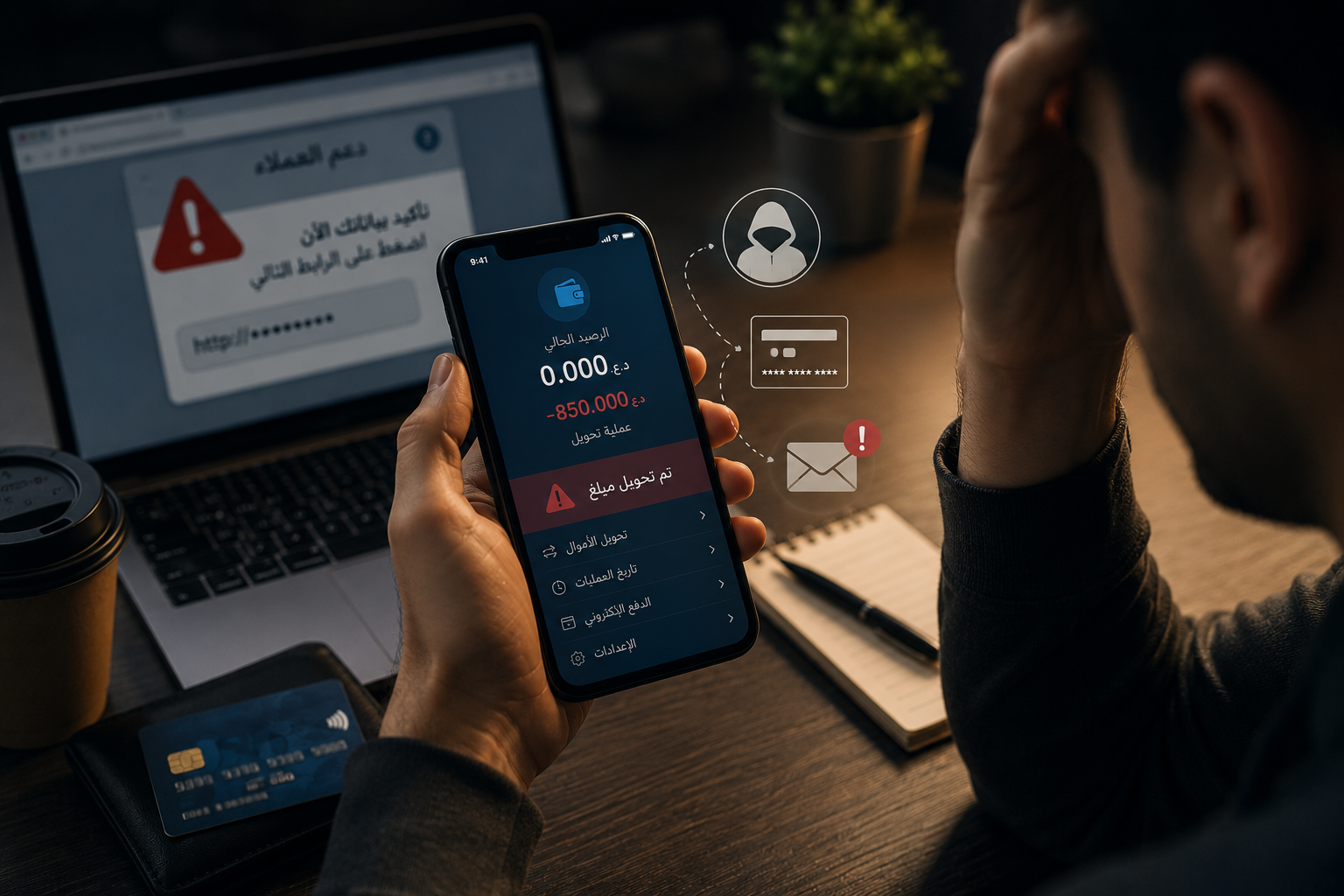
As Iraq continues to expand digital payments and electronic financial services, the number of users relying on digital wallets and financial applications in their daily lives continues to grow
At the same time, however, another trend is expanding alongside this growth:
Digital fraud
From fake links and phishing messages to fraudulent support pages and impersonation of financial institutions, Iraqi users are increasingly facing a new category of risks that were largely unfamiliar during the era of traditional cash-based transactions
While digital transformation promises greater convenience and efficiency, a more important question is beginning to emerge:
When a user loses money due to digital fraud, who protects them?
The Problem Is Bigger Than Fraud Itself
Digital fraud is not unique to Iraq It is a global challenge faced by every market that expands digital financial services
However, the real danger is not the existence of fraud itself
The danger begins when users lose trust in the digital financial ecosystem as a whole
A person who falls victim to fraud may not only lose money They may stop using the service altogether
They may share their negative experience with family members and friends
They may become another example used to justify returning to cash-based transactions
At that point, the issue shifts from an individual incident to a challenge affecting the entire sector
Has Fear of Fraud Become One of the Reasons Cash Remains Dominant?
Discussions about electronic payments in Iraq often focus on infrastructure, payment terminals, or the number of digital wallets available in the market
Yet there is another factor that may be equally important:
Trust
Users who constantly hear stories about fraud, stolen accounts, phishing attacks, or fake links may become hesitant to move a larger portion of their money into the digital world
This may help explain why some people still perceive cash as safer, even if it is less convenient and slower to use
The fear of fraud cannot be ignored as a factor influencing the pace of digital financial adoption among certain segments of society
Everyone Issues Warnings But What Happens After the Fraud Occurs?
Banks, payment companies, and financial institutions regularly publish awareness messages:
- Do not share verification codes
- Do not click suspicious links
- Do not provide your personal information to anyone
But what happens when a user ignores these warnings or falls victim to a sophisticated social engineering scheme?
This is where an important but often overlooked question arises:
Who is responsible after the fraud occurs?
Does the user know where to seek help?
And do they feel that there is a system capable of assisting them and restoring their confidence?
Who Is Actually Responsible?
In many cases, legal or technical responsibility falls on the user if they voluntarily share account information or verification codes
However, reality is often more complicated
Fraudsters do not rely solely on technical hacking They frequently exploit trust, emotions, and psychological manipulation
Fake pages, messages, and accounts can sometimes appear highly convincing, making them difficult for ordinary users to identify
For this reason, protecting users cannot rely on awareness campaigns alone
It also requires:
- Advanced fraud detection systems
- Stronger security measures
- Continuous digital education
- Faster response mechanisms
- Improved reporting and recovery processes
The Battle for Trust
As digital financial services continue to expand, trust becomes even more important than the technology itself
Users may tolerate occasional service delays
They may accept minor technical issues
But they rarely forget losing money
This is why building trust is not achieved simply by launching new applications or introducing new services
It is achieved by convincing users that their money is protected and that a reliable system exists to respond effectively when problems occur
Conclusion
The success of fintech in Iraq does not depend solely on the number of digital wallets, payment volumes, or POS terminals deployed across the country
It also depends on how safe users feel
The greater the trust, the greater the adoption of digital services
And the more fraud stories spread without clear solutions from the user’s perspective, the greater the likelihood that people will return to cash
Perhaps the most important question today is no longer:
How do we attract more users to digital financial services?
But rather:
How do we maintain the trust of those who have already joined them؟