

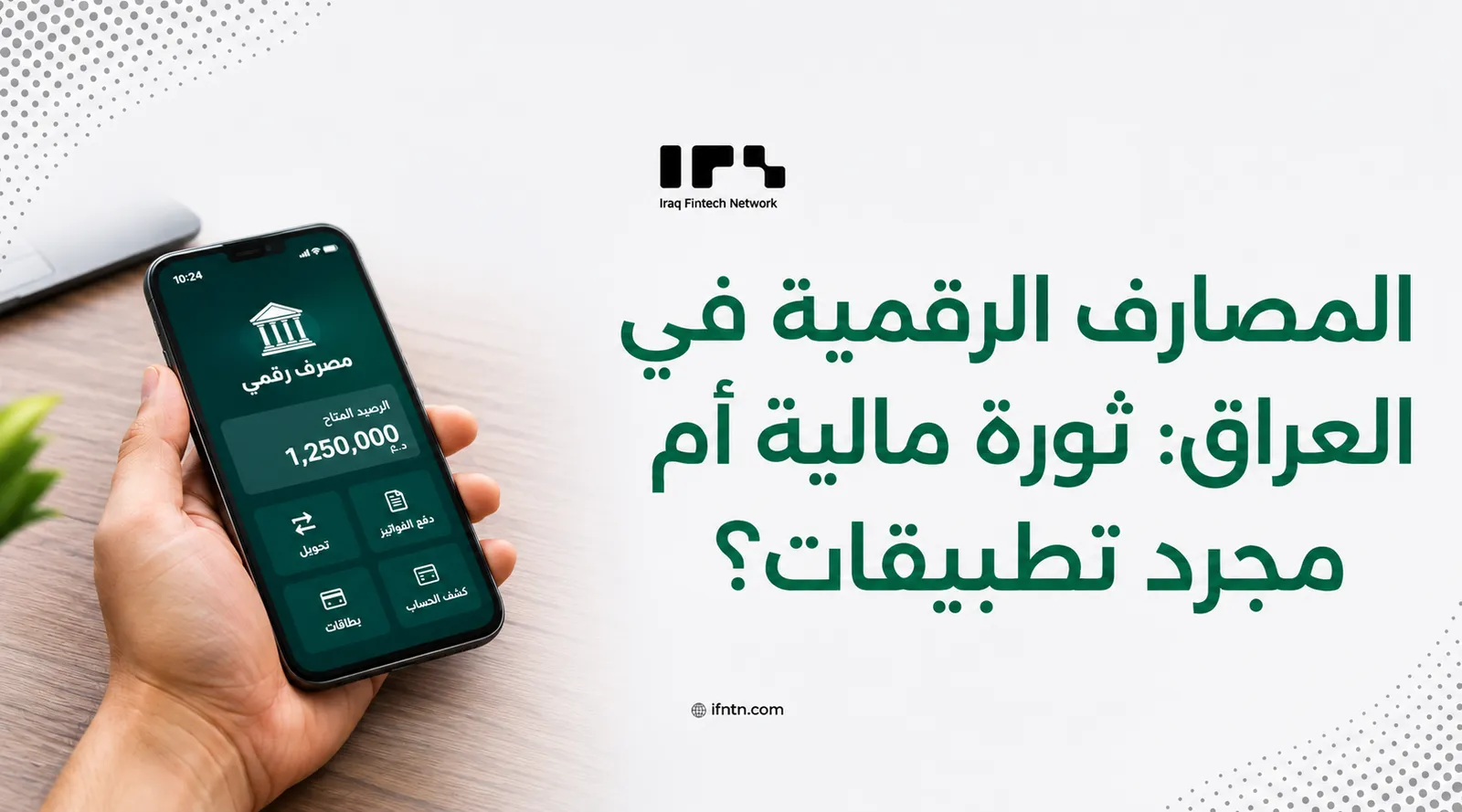
An analytical look at the future of digital banks in Iraq, and the core difference between true digital transformation and launching mobile apps on legacy banking systems.
Today, a bank is no longer a opulent building of marble and glass; it's code and data moving at lightning speed. When we apply this reality to the Iraqi market, a crucial question arises that cannot be ignored: Do digital banks in Iraq represent a radical restructuring of the financial system, or are they merely a modern veneer concealing the bureaucracy of traditional banks behind a phone screen?
The Central Bank of Iraq's Regulations and the Digital Transformation Gap
Recently, the Central Bank of Iraq has taken bold regulatory steps to license digital banks (neobanks) with the aim of breaking the dominance of cash and expanding financial inclusion. An excellent move on paper, but technology doesn't recognize good intentions alone. Launching a sleek app doesn't transform a traditional bank into a digital one.
The fundamental difference lies in the mindset and the infrastructure. Traditional banks build a modern facade on top of outdated, inefficient systems, leaving you ultimately forced to visit a branch to sign a document or receive a card. A truly digital bank, on the other hand, is built from the ground up in the cloud, relying on digital verification (e-KYC), artificial intelligence, and open banking interfaces to give you an account and instant service in seconds, without queues or paperwork.
The Challenge of Trust and the Future of Fintech in Iraq
In Iraq, the biggest obstacle to financial technology (Fintech) isn't writing code, but rather changing user behavior and building trust. Many customers still associate security with a bank employee behind a glass window and a blue ink stamp, even if they withdraw their salaries in cash as soon as they're deposited. Meanwhile, a younger generation has emerged that sees going to the bank as a waste of time and seeks speed, transparency, and the absence of hidden fees in electronic payment transactions.
The truth that financial institutions must understand is simple: users don't want a bank; they want smart solutions to their everyday problems. The success of digital banks in Iraq will not be measured by the number of downloads or massive advertising campaigns, but by their ability to solve real-world problems, such as expediting the release of outstanding funds, providing immediate technical support, and financing small businesses based on actual sales data instead of complex real estate guarantees.
The next battle in the Iraqi banking sector will not be won by capital or the number of branches, but by the quality of the digital experience and the intelligent use of data. Only when keeping money within the app becomes easier and more beneficial than withdrawing cash will we truly enter the era of digital banking. The future belongs to those who adapt most quickly, not those who are largest.