

Can Iraq Transform from a Consumer of Financial Technology into a Producer?
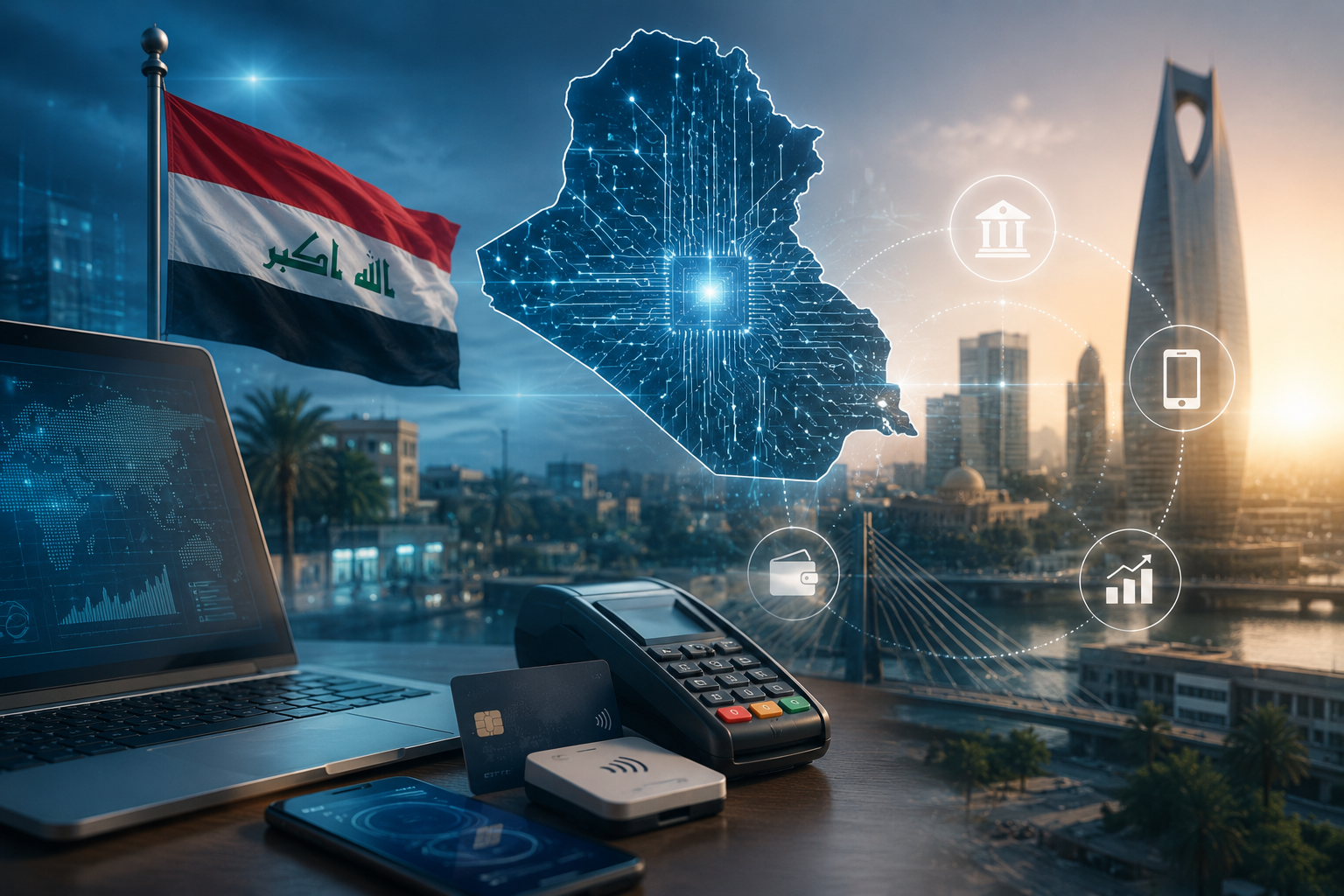
Over the past few years, Iraq has witnessed significant growth in the adoption of financial technology. Digital wallets have become more widespread, digital payments have increased, electronic payment services have expanded, and technology has become an increasingly important part of the daily financial lives of both individuals and businesses.
Amid this progress, however, a different question emerges—one that goes beyond the usual discussions about payments, transfers, and digital wallets:
Will Iraq remain a consumer of financial technologies developed elsewhere, or can it eventually become a producer and exporter of digital financial solutions?
It may sound like an ambitious question, but it is directly linked to the future of Iraq’s financial and technology sectors.
From Consumption to Production
When discussing fintech in Iraq, most conversations focus on the use of services, systems, and applications.
However, the greatest economic value is not always generated by using technology—it is often created by developing, owning, and exporting it.
The countries leading the global fintech industry do not derive their success solely from the number of users they serve. They create value by building companies, platforms, and technologies that are adopted across multiple markets.
This is where the distinction between consuming technology and creating it becomes clear.
Does Iraq Lack Talent?
In reality, it would be difficult to argue that the problem lies in a shortage of talent.
Iraq has thousands of software developers, engineers, network specialists, and technology professionals.
Universities and technical institutes continue to graduate increasing numbers of skilled professionals every year.
Many Iraqi experts already work for regional and international companies, contributing to products and services used well beyond Iraq’s borders.
This suggests that the challenge may not be the availability of talent, but rather the environment that enables talented individuals to transform their ideas into scalable companies and products.
Why Don’t We See Iraqi Fintech Companies Expanding Regionally?
This is a question worth asking.
While fintech and technology companies in several neighboring countries have successfully expanded beyond their domestic markets, most Iraqi fintech companies remain focused primarily on local opportunities.
This is not necessarily due to a lack of technical capability.
Instead, it may be linked to several factors, including:
- Limited venture capital investment.
- Difficulties in regional expansion.
- Regulatory challenges.
- A smaller startup ecosystem compared to some neighboring markets.
- Limited access to technology-focused investment capital.
These factors affect the ability of startups to evolve from local ideas into regional businesses.
Iraq’s Market Is an Opportunity, Not Just a Challenge
Discussions about Iraq’s technology sector often focus on challenges.
Yet from another perspective, Iraq offers a large market, a young population, and rapidly growing adoption of smartphones and digital services.
These elements create an important environment for testing and developing innovative financial solutions.
Many of today’s global technology companies did not necessarily begin in large markets. They started by solving real problems and delivering practical solutions that resonated with users.
Are We Focusing More on Using Technology Than Building It?
Perhaps this is the most important question.
Over the past several years, much of the attention has been directed toward expanding digital services and increasing their adoption.
However, building a strong fintech sector in the long term requires more than importing and operating solutions.
It requires developing local products capable of innovation and competition.
The next phase may not be defined solely by growth in users or digital transactions, but by Iraq’s ability to generate knowledge, technology, and products that create real added value.
What Does Iraq Need?
To transform from a consumer of financial technology into a producer, Iraq needs a comprehensive ecosystem that includes:
- An environment that encourages innovation.
- Funding for startups.
- Strong partnerships between the financial and technology sectors.
- Continued development of digital skills.
- Regulations that support innovation while maintaining financial stability.
The success of any technology sector does not depend on a single company or application—it depends on an ecosystem that works together.
Conclusion
Iraq has made significant progress in adopting financial technology and expanding the use of digital services over recent years.
However, the question that may define the next stage is:
Will Iraq remain a market that consumes financial solutions developed abroad?
Or will it succeed in building companies, platforms, and technologies with an Iraqi identity that can compete across the region and beyond?
Because the true success of a fintech sector is measured not only by the number of users it serves or the volume of transactions it processes, but also by its ability to create innovation—not merely consume it