

Before July 2026… Is Iraq Really Ready for a Reduced-Cash Economy?
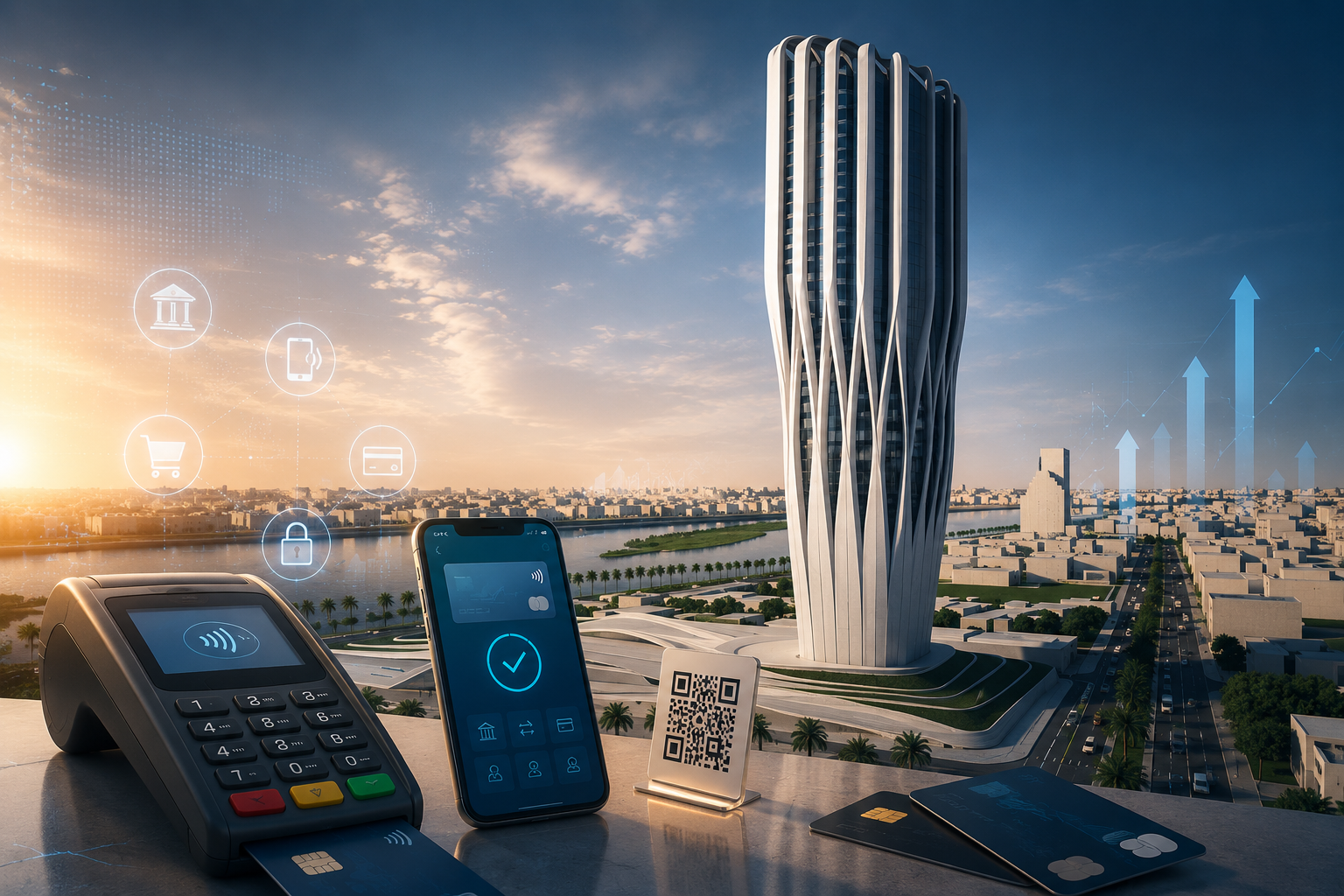
As July 2026 approaches, the issue of electronic payments has returned to the center of discussion in Iraq, particularly with growing conversations around government efforts to reduce dependence on cash and expand the use of digital payment systems across public institutions, markets, and everyday services
In recent months, electronic payment companies, banks, and digital financial service providers have accelerated their activities in preparation for a phase that may witness broader adoption of POS devices and electronic payment services throughout the Iraqi market.
This time, the shift does not appear merely symbolic. Instead, it looks increasingly like an attempt to reorganize the way financial transactions are conducted both داخل government institutions and across the wider market.
Payment Companies Are Moving Faster
Recently, electronic payment companies have expanded the deployment of POS devices across:
- Markets
- Restaurants
- Pharmacies
- Government institutions
- Retail shops
- Service centers
Some companies have also started focusing on improving systems designed to reduce problems related to slow internet connections or service interruptions during payment operations.
Companies such as:
- Qi Card
- ZainCash
- FastPay
- Amwal
- Switch
are currently working to strengthen their presence in the market, especially amid expectations of increased reliance on electronic payments during the coming phase.
POS Devices Are No Longer Just an Extra Service
A few years ago, the use of point-of-sale devices was relatively limited in Iraq. Today, however, POS systems have become a central part of discussions surrounding the future of financial services and everyday commerce.
Many institutions and businesses have started viewing electronic payment as a necessity rather than an optional feature, especially with the growing adoption of cards and digital wallets among increasing segments of users.
Iraq Still Relies Heavily on Cash
Despite this expansion, Iraqi society still depends heavily on cash transactions in daily life.
Many citizens prefer holding money physically, whether due to habit or because of limited trust in some banking systems and digital financial services.
Additionally, large parts of local markets continue operating through entirely traditional methods, making the transition toward electronic payments more complex compared to some other countries.
Merchants Face a Different Reality
Shop owners and market operators are also entering a new phase, where electronic payment is no longer simply an optional extra for certain businesses.
The coming period may push more merchants toward:
- Using banking accounts
- Adopting POS systems
- Digitally organizing financial operations
- Increasing reliance on electronic services
At the same time, concerns remain among some business owners regarding internet stability, transaction fees, and payment processing speed.
Competition May Shift Toward QR Code Payments
Alongside the expansion of POS systems, some services and applications have increasingly adopted QR Code payment methods because of their simplicity and lower cost compared to certain traditional payment devices.
Specialists believe that competition in the coming years may not revolve only around POS providers, but between:
- POS devices
- QR Code payments
- Digital wallets
- Direct payment applications
especially as smartphone adoption continues to grow across Iraq.
The Real Challenge Is Not Only Technical
The core issue is not simply the number of devices or applications available, but user behavior itself.
Transforming a cash-dependent society into one that relies more on digital services requires:
- Greater trust in financial services
- Stable infrastructure
- Better internet connectivity
- Strong protection systems
- Easy user experiences
Any weakness in these elements could slow the transition even as digital services continue to expand.
Is Iraq Entering a Different Financial Phase?
Current indicators suggest that Iraq is gradually moving toward a more digitally driven financial environment, although the path toward a fully digital model remains long.
As fintech companies, banks, and digital services continue expanding, competition in the coming years appears increasingly centered around one key factor: who can provide the fastest, simplest, and most stable experience for Iraqi users.
Conclusion
Discussions about reducing dependence on cash in Iraq are no longer purely theoretical. They have become part of real movements taking place inside the financial and technology sectors.
With July 2026 approaching, electronic payment companies, banks, and digital service providers are moving at a faster pace in preparation for a phase that may significantly reshape how financial transactions are conducted across Iraq in the years ahead