

Are Iraqi Banks Actually Transforming Into Digital Banks?
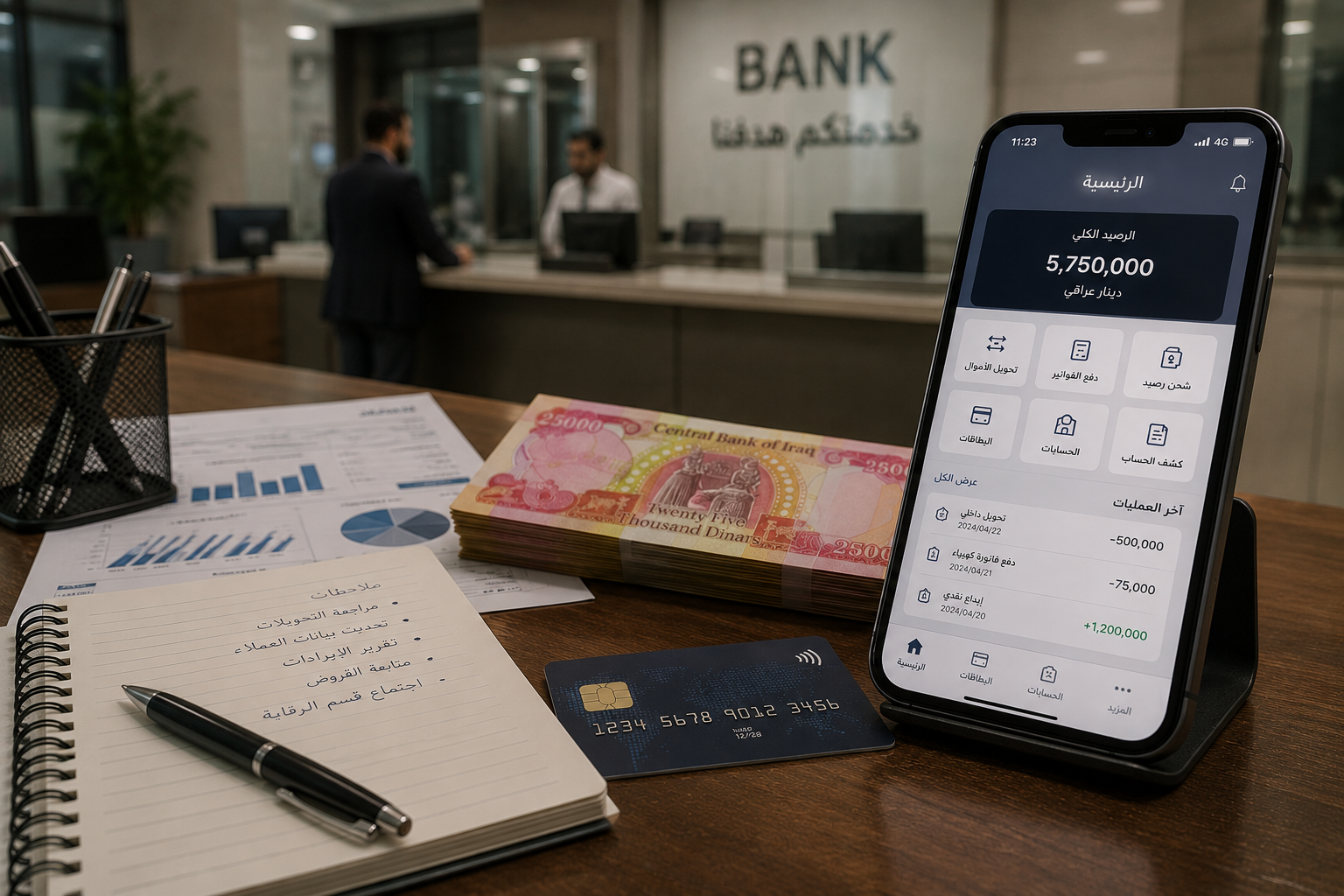
Over the past few years, Iraqi banks have started moving more visibly toward digital services after a long period in which the banking sector relied heavily on traditional procedures, paper-based processes, and in-branch services
Today, the Iraqi banking market appears to be entering a different phase, with several banks focusing on banking applications, electronic services, and digital payments in an attempt to keep pace with the transformation taking place in Iraq’s fintech sector and across the region.
However, the key question remains: does what we are seeing today represent a genuine transformation toward digital banking, or is it still only partial modernization?
Banking Applications Have Become Part of the Competition
A few years ago, having a banking application was considered an additional feature or secondary service for some banks. Today, however, the banking app has become a core part of the bank’s identity itself.
In recent months, several Iraqi banks have increasingly focused on:
- Banking applications
- Electronic transfers
- Mobile account management
- Digital card issuance
- Online customer services
Some banks have also started improving user experience inside their applications, particularly as smartphone adoption among users continues to rise.
The Market No Longer Looks the Same
Competition within Iraq’s financial sector has changed significantly in recent years, especially after the expansion of digital wallets, payment companies, and digital financial services.
This expansion placed traditional banks in front of a new reality, where users no longer compare only one bank against another, but compare:
- Banking applications
- Digital wallets
- Ease of use
- Service speed
- The ability to complete operations via mobile phone
This has pushed many banks to rethink how they deliver their services.
Digital Transformation Is No Longer Optional
In the past, some banks moved slowly toward digitalization. Today, however, digital transformation has become closer to a necessity rather than an optional upgrade.
Users now expect to be able to:
- Transfer money electronically
- Monitor accounts from mobile devices
- Make digital payments
- Manage cards easily
- Complete services without lengthy branch visits
Any bank that fails to keep pace with this shift may gradually fall behind in competition.
Have Iraqi Banks Reached the Stage of Full Digital Banking?
Despite current progress, specialists believe that most Iraqi banks are still in the transformation stage rather than the stage of becoming fully digital banks.
This is due to several factors, including:
- Continued reliance on traditional transactions
- The need for stronger infrastructure development
- Differences in the quality of applications and services
- Slow performance in some banking systems
- Security and technical challenges
Some banking applications also continue to face criticism regarding speed and ease of use.
Digital Banks Are Changing the Meaning of Banking Services
Globally, digital banks no longer depend on large physical branches or traditional procedures. Instead, they focus on:
- Applications
- Instant services
- Ease of use
- User experience
- Integration with other digital services
This model is gradually influencing even markets that historically relied heavily on traditional banking systems.
Fintech Is Pushing Banks Toward Change
It is clear that the expansion of Iraq’s fintech sector has played a major role in pushing banks to accelerate their digital transformation.
Digital wallets, payment companies, and financial applications have raised user expectations, forcing banks to develop their services more quickly than before.
This explains the recent appearance of:
- New electronic services
- Advanced banking applications
- Modern banking cards
- Partnerships with payment companies and digital service providers
across several Iraqi banks.
Is User Behavior Changing in Iraq?
Despite current developments, a large segment of users still depends on cash and traditional financial interactions, especially outside major cities.
At the same time, younger users and those accustomed to digital applications are increasingly moving toward electronic services, which may gradually reshape Iraq’s banking sector in the coming years.
Conclusion
Iraqi banks have indeed started moving toward digital services, but the journey toward becoming fully digital banks still requires major improvements in infrastructure, services, and user experience.
As fintech continues expanding across Iraq, the banking sector appears likely to enter a different competitive phase in the coming years—one in which success will not belong only to the largest bank, but to the bank capable of delivering a faster, easier, and more flexible digital experience for users