
Are Delivery Apps Gradually Turning Into Financial Platforms?
A few years ago, delivery applications in Iraq served one simple and clear purpose:
Ordering a ride or delivering food
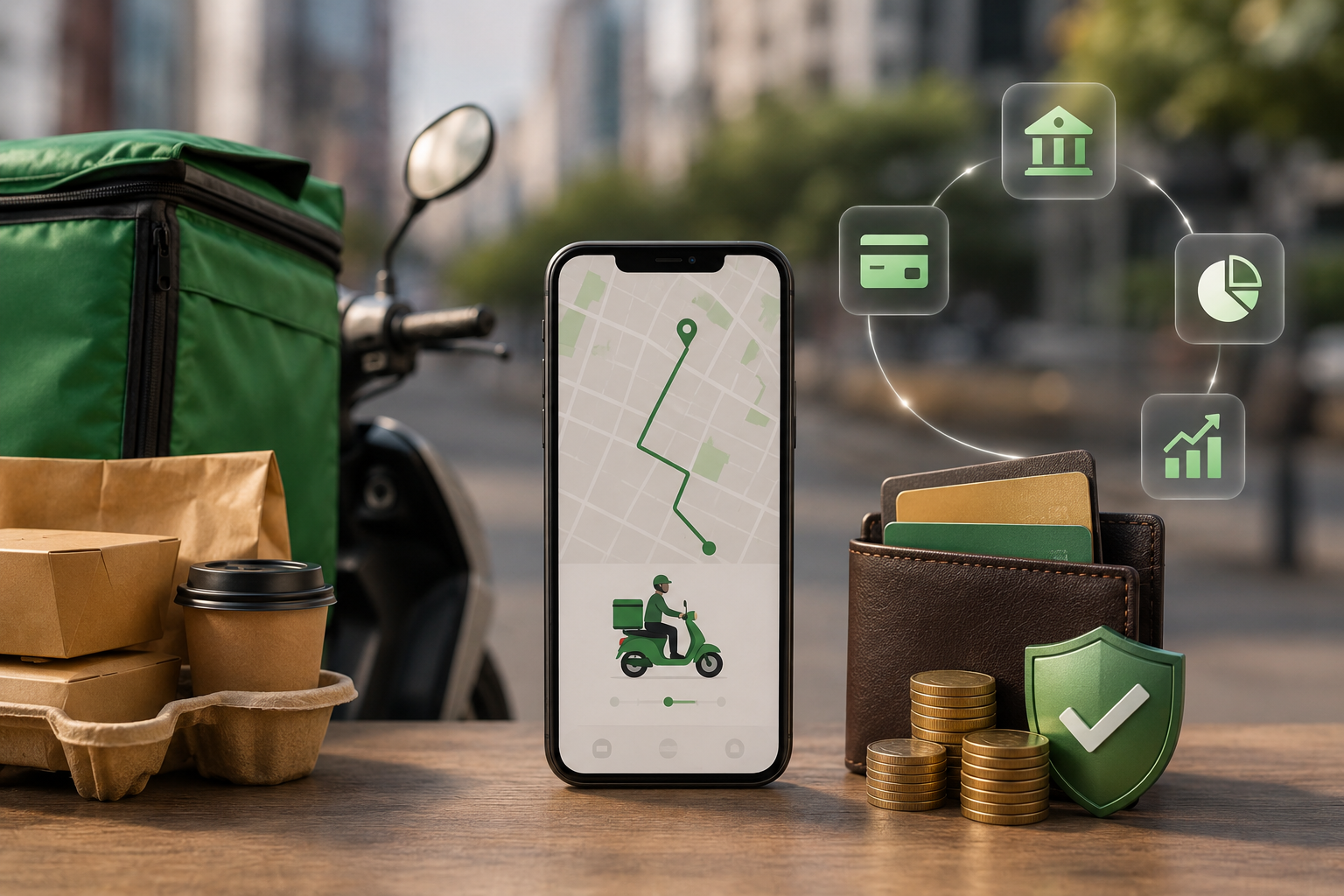
But what is happening today inside the Iraqi market looks very different. Many delivery applications are no longer limiting themselves to transportation or delivery services only. Instead, they are gradually moving toward services connected to electronic payments, digital wallets, and financial technology.
With the expansion of:
- Digital wallets
- In-app payments
- Digital discounts
- Loyalty systems
- Subscription services
a new question has started emerging within Iraq’s fintech market:
Are delivery applications actually transforming into financial platforms?
The App Is No Longer Just a Transportation Tool
In the beginning, competition among delivery applications focused mainly on:
- Delivery speed
- Number of drivers
- Prices
- Promotions
Today, however, the rules have changed.
Applications are now competing over:
- Payment methods
- Keeping users inside the platform
- Number of daily transactions
- Integration with everyday services
This shift has pushed electronic payment services deeply into the sector.
Why Are Delivery Apps Interested in Electronic Payments?
The reason goes beyond convenience or technology. It is about controlling the user’s entire digital journey.
When users pay directly inside the application:
- They spend more time on the platform
- They become more attached to the service
- Daily app usage increases
- Spending behavior turns into valuable economic data for the company
For this reason, many applications are gradually pushing users toward:
- Digital wallets
- Prepaid systems
- Digital cards
- Cashback and rewards programs
instead of relying entirely on cash.
Discounts Are Not Always Just Promotions
In many cases, discounts linked to electronic payments are not simply ordinary offers.
Some applications provide:
- Lower prices
- Cheaper delivery fees
- Exclusive deals
- Reward points and bonuses
only when digital payments are used.
This means the applications are not merely encouraging electronic payments — they are actively trying to:
Reshape user behavior itself.
Are Delivery Apps Collecting Financial Data?
Every order placed through an application reveals valuable information about the user, including:
- What they order
- When they order
- How much they spend
- How they pay
- Where they move
As payment systems expand inside these applications, platforms are accumulating enormous amounts of financial and behavioral data.
Because of this, some analysts believe delivery applications are no longer simply service providers. They are gradually evolving into platforms with growing financial and digital influence.
Whoever Controls Daily Usage Wins More
One of the biggest advantages delivery applications have in the fintech race is:
Daily repetition.
Users may open the app:
- In the morning
- At noon
- In the evening
to request:
- A ride
- Food
- Groceries
- Fast services
This creates a continuous daily relationship with the user — something many traditional financial applications struggle to achieve.
Are Iraqi Super Apps Beginning to Appear?
What is happening today resembles the early stages seen previously in several Asian markets, where transportation and delivery applications eventually transformed into:
- Digital wallets
- Payment platforms
- Shopping services
- Integrated financial ecosystems
Although Iraq’s market is still in an early phase, current indicators suggest some applications are already moving in this direction.
But the Road Is Not Easy
Despite this expansion, several major obstacles still stand in the way of delivery applications becoming fully developed financial platforms, including:
- Limited trust in prepaid payments
- Heavy reliance on cash
- Internet connectivity problems
- Uneven service quality
- Privacy and data concerns
In addition, Iraqi users tend to switch applications quickly if service quality declines or prices rise.
Could Delivery Apps Become More Influential Than Banks?
A question increasingly discussed globally is no longer:
Who owns the best financial app?
but rather:
Who owns the daily user?
The application that becomes deeply integrated into a user’s spending habits, movement, and daily requests gains the opportunity to evolve into a major financial and service hub in the future.
For this reason, the boundaries between:
- Delivery companies
- Digital wallets
- Financial applications
are becoming less clear than before.
Conclusion
Delivery applications in Iraq are no longer operating only as transportation or ordering services. They are gradually expanding toward digital payment systems and the broader digital economy.
As digital services and electronic wallets continue to grow, some of these applications may eventually evolve into integrated financial platforms playing a much larger role in the everyday lives of Iraqi users.